Leave Your Message
-
 Email
-
 WeChat

Choosing a Female Connector supplier involves more than comparing prices or catalog sizes. Buyers must examine contact materials, plating thickness, rated current, operating temperature, and mating-cycle data. A connector that looks robust may still loosen under vibration or corrode in humid conditions. Ask for drawings, test reports, and clear traceability before approving samples.
Quality expert W. Edwards Deming offered a useful principle: “Quality comes not from inspection, but from improvement of the production process.” That idea matters here. A reliable supplier should explain how it controls crimping, molding, inspection, and lot changes—not merely promise consistent parts. Request sample components and check fit, retention force, and finish under your actual application conditions. Small details count.
This guide compares seven suppliers for global buyers, considering product range, customization, documentation, production capacity, and communication. Not every supplier fits every project. Some excel at standard terminals; others support specialized assemblies or tighter engineering collaboration. Verify certifications and test claims directly, since requirements vary by application and destination market. No shortlist is perfect. Supplier pages can be polished, while production evidence is harder to judge. That is worth remembering. Use the comparison as a starting point, then confirm specifications, lead times, and quality controls with the supplier before placing an order.
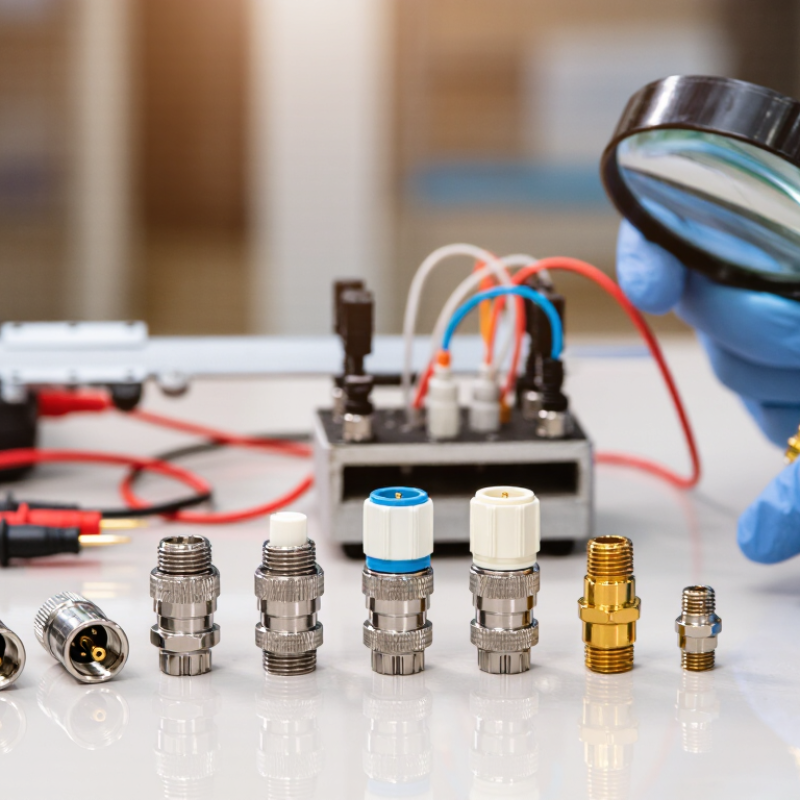
A female connector contains socket contacts designed to receive matching male pins. The “female” side may sit in a cable plug, equipment panel, or circuit-board header; its form depends on the connection system. Inside, spring-loaded metal contacts grip each pin, while an insulating housing keeps conductive paths apart. A locking tab or threaded coupling helps prevent vibration from loosening the connection. Small details matter: contact plating, wire gauge, current rating, temperature range, and sealing all affect performance.
These connectors carry power, signals, or both. You may find them in vehicle wiring harnesses, factory sensors, medical equipment, and everyday appliances. In a car, a sealed connector near the wheel must resist moisture, grit, and repeated vibration. On a circuit board, a compact socket may link a sensor module to its controller. The International Energy Agency’s Global EV Outlook 2024 estimated that electric-car sales would reach about 17 million in 2024, increasing demand for dependable vehicle electrical connections. Still, market growth does not make every connector suitable. Naming can be imperfect, too: suppliers may use “socket,” “receptacle,” or “female” differently, so buyers should verify drawings, mating parts, and test conditions.
| Connector Category | Female-Side Form | Common Uses | Specifications to Confirm | Supplier Capabilities to Evaluate |
|---|---|---|---|---|
| Wire-to-Board | A receptacle housing containing socket contacts that mate with pins on a circuit board header. | Appliance wiring, control panels, lighting, and internal electronics connections. | Pitch, number of circuits, wire gauge range, current and voltage ratings, locking method, and operating temperature. | Consistent crimp quality, contact and housing compatibility, drawing support, and traceable material documentation. |
| Board-to-Board | A socket-style connector that mates directly with a pin or post connector on another circuit board. | Stacked circuit boards in computers, communication equipment, and compact electronic devices. | Pitch, board spacing, stack height, contact count, alignment tolerance, and mating-cycle rating. | Precision molding, dimensional inspection, samples for fit testing, and clear guidance on board-layout requirements. |
| Circular Industrial | A circular receptacle with socket contacts, often secured by a threaded, bayonet, or push-pull coupling. | Factory automation, sensors, machinery, and outdoor equipment connections. | Contact arrangement, coupling style, ingress-protection rating, shielding, current rating, and temperature range. | Documented environmental test results, compatible mating components, cable-assembly options, and production traceability. |
| Rectangular Industrial | A rectangular receptacle insert or housing with socket contacts for signal, power, or mixed layouts. | Industrial control equipment, machinery interfaces, and equipment-to-cable connections. | Contact layout, insert arrangement, housing material, latching system, sealing requirements, and electrical ratings. | Availability of matching housings and contacts, configuration support, assembly instructions, and inspection records. |
| USB Receptacle | A device-side receptacle that accepts a compatible USB plug; connector shape and capability depend on the USB type and implementation. | Charging, data transfer, and peripheral connections in consumer and industrial electronics. | USB connector type, supported data rate, power-delivery requirements, orientation, mounting style, and insertion-cycle rating. | Verified electrical performance, mechanical durability data, applicable compliance documentation, and correct product labeling. |
| Coaxial RF Jack | A coaxial jack with a center contact and outer conductive body that mates with a compatible RF plug. | Antenna connections, radio-frequency test equipment, wireless devices, and communications systems. | Connector interface, characteristic impedance, frequency range, return loss or VSWR, cable type, and coupling method. | Measured RF test data, interface compatibility checks, controlled manufacturing tolerances, and protective packaging. |
| AC Power Inlet | An equipment-mounted inlet with contacts that accept a compatible power-cord connector. | Power entry for computers, instruments, appliances, and other electrical equipment. | Applicable inlet configuration, rated voltage and current, grounding arrangement, mounting style, and required safety approvals. | Relevant certification documents, material and temperature ratings, production-lot traceability, and clear regional compliance information. |
What “female connector” means: It generally refers to a receptacle or socket contact designed to receive a compatible pin, plug, or blade. Always confirm the exact mating interface and electrical ratings; these vary by connector family and product design. The rows above are connector categories and supplier evaluation criteria, not a ranked list of companies.