Leave Your Message

2026 Best Female Connector Types for Global Buyers

Choosing a Female Connector is not just a matter of matching shapes. Buyers must consider electrical ratings, contact material, mounting style, and the conditions where the connection will operate. A connector used inside a control cabinet may face different demands from one exposed to vibration, dust, or frequent mating cycles. Small details matter.

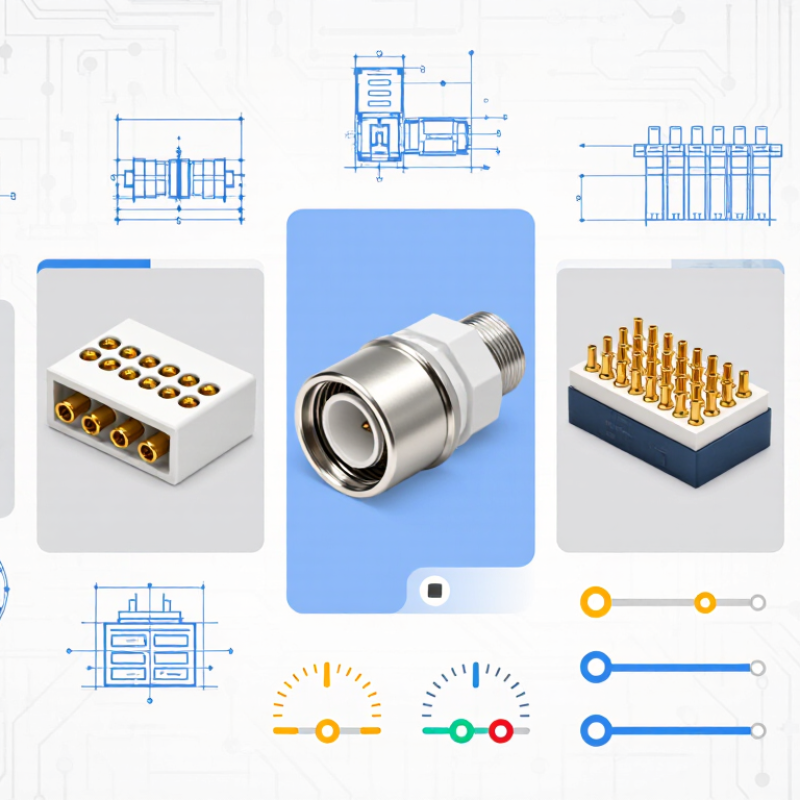
This guide introduces common female connector types for global buyers in 2026, including circular, rectangular, coaxial, board-to-board, and terminal-based options. It explains how to compare key specifications, such as pin count, current capacity, voltage rating, ingress protection, and compatible mating parts. Datasheets and supplier drawings should be checked carefully. A product photo alone is not enough.

There is no universal best choice. A compact connector may save space but complicate field replacement. A sealed design may suit harsh environments, yet add cost or size. These trade-offs deserve attention. Even experienced sourcing teams can overlook cable clearance or the actual mating cycle requirement. That happens. The sections ahead offer a practical framework for narrowing options, asking suppliers precise questions, and verifying samples before larger orders. Specifications vary by manufacturer, so confirm performance claims against current technical documents and application needs. This is a starting point, not a substitute for engineering review.
2026 Best Female Connector Types for Global Buyers

Female Connector Basics and Global Buyer Requirements

Female connectors receive male pins, blades, or plugs and create a protected electrical interface.

They appear as panel-mount sockets, inline housings, board connectors, and terminal receptacles. Each type serves a different installation need. Panel versions save space. Inline versions simplify cable repair. Locking features reduce accidental separation during vibration. Contact material, plating, pitch, and keying affect performance. These basics matter before any price comparison.

Global buyers should define current, voltage, temperature, wire size, and mating cycles. Ask for drawings, tolerance data, test reports, and traceable lot information. For outdoor equipment, check the stated ingress protection rating and sealing method. Industrial buyers may also need insulation resistance, flame behavior, and salt-spray results.

Confirm relevant regional requirements before production, not after shipment. Samples must match production. That sounds obvious. Yet it is often missed. Also confirm minimum order quantities, packaging labels, lead times, and replacement support.

From sourcing work, I have found that connector selection fails when mating parts are treated as separate purchases.

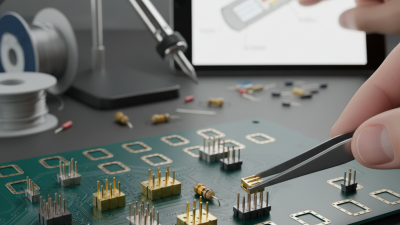
A female housing can fit mechanically but still use the wrong contact size. Request a complete mating sample. Check insertion force by hand. Record cable strain, latch feel, and terminal retention. One imperfect detail deserves attention: catalog ratings may assume ideal assembly. Real factories face humidity, dust, rushed crimping, and operator variation. Build a small verification plan around those conditions. It is slower. It is usually safer.

Key Female Connector Types by Design and Application

For global buyers, the best female connector depends on design pressure, not appearance. A female terminal receives a mating pin, blade, or plug, so contact force and alignment matter. Wire-to-board types suit compact control panels and sensors. Board-to-board sockets support dense automation equipment. Circular female connectors fit motors and outdoor instruments, especially when vibration and sealing are serious concerns.

Application changes the specification. A factory sensor may need an IP67-rated circular connector, while a consumer device may favor a low-profile board socket. Coaxial female connectors remain useful for radio-frequency assemblies, where shielding and impedance stability affect signal loss. High-speed data designs require controlled geometry and short signal paths.

MarketsandMarkets estimated the global connector market at about USD 84 billion in 2024, with continued growth toward 2029, driven partly by automation, vehicles, and data infrastructure.

Material selection also matters. Gold-plated contacts resist oxidation, but plating thickness must match the mating cycle. Tin contacts can reduce cost, yet they may need stronger protection in humid environments. The IEC 60512 test series is widely used for evaluating electrical and mechanical connector performance.

Still, report figures cannot replace testing. A connector that passes laboratory checks may loosen beside a vibrating pump. This is where buyers sometimes choose by price first, then discover the expensive part: field replacement. There is no perfect female connector, only a better fit for the actual load.

Material, Contact, and Protection Standards to Compare

For global buyers, a female connector is not chosen by pin count alone. Housing material sets the first boundary of reliability. Polyamide suits many industrial assemblies, while PBT offers stable insulation and dimensional control. PPS may perform better near heat, chemicals, or tight tolerances. Check operating temperature, flame rating, and resistance to oils or moisture. A low-cost housing can become brittle after repeated heat cycles. That risk is easy to overlook.

Contacts deserve closer inspection. Copper alloys support good conductivity and spring performance. Tin plating is practical for general applications and controlled environments. Gold plating can reduce oxidation at low signal levels, but buyers should confirm thickness and mating-cycle requirements. Nickel underlayers may improve durability. Ask for contact resistance, rated current, voltage, and retention-force data. Small details matter. Not always.

Protection claims must match the installation, not just the catalog. IP54 may resist dust and splashing, while IP67 requires suitable sealing and controlled mating conditions under IEC 60529. The rating can fail if the cable diameter is wrong or the seal is damaged. Compare insulation spacing, temperature rise, flammability performance, and relevant connector safety testing. Request traceable test reports, material declarations, and production inspection records. I have seen specifications that looked complete but omitted salt-spray duration. A perfect specification rarely exists. Recheck the missing parts.

2026 Best Female Connector Types for Global Buyers

Material, contact, and protection standards to compare

This comparison uses representative standardized variants rather than brand-specific products. Current and voltage values are typical maximum ratings for the selected connector families, while protection levels depend on the mating interface, sealing design, and installation conditions. M12 connectors are commonly selected for sealed industrial applications; RJ45 is widely used for data networking; USB Type-C supports compact power and data interfaces; and IEC 60320 C13 is common for equipment power connections.

How to Select Female Connectors for Different Industries

Selecting female connectors starts with the equipment, not the catalog photograph. In industrial controls, choose sockets with secure locking, clear keying, and contacts rated above the working current. Vibration demands strong retention. Dusty factories may require sealed housings and corrosion-resistant contact surfaces. A connector that feels perfect on a clean bench can fail beside cutting machinery.

Medical equipment needs low electrical noise, reliable sterilization resistance, and smooth surfaces that support cleaning. For vehicles and outdoor systems, check temperature range, water protection, impact strength, and mating-cycle performance. Smaller electronics often favor compact female headers, but fine pitch increases alignment risk. It looks efficient. It is not always practical.

Field experience shows that cable size, installation space, and operator access are frequently underestimated. Confirm the wire gauge before choosing the terminal. Measure the rear clearance, too. For international purchasing, request test reports, dimensional drawings, material details, and traceable production records. Verify the applicable safety and environmental requirements for the destination market. Samples should undergo pull tests, repeated mating, heat exposure, and vibration checks. Do not trust one successful sample. Connector selection remains a compromise between cost, service life, and assembly speed. Sometimes the cheaper part creates slower installation and higher inspection effort. That lesson is easy to miss.

2026 Best Female Connector Types for Global Buyers - How to Select Female Connectors for Different Industries

Practical comparison of common female connector configurations using typical industry performance ranges.

Female Connector Type Typical Contact Arrangement Typical Current per Contact Typical Voltage Rating Typical Operating Temperature Environmental Protection Common Industries Key Selection Criteria
Wire-to-Board Receptacle 2–24 positions; single- or double-row; 2.00–5.08 mm pitch 1–10 A 30–300 V AC/DC −40°C to +105°C Usually IP20 when unmated Consumer electronics, appliances, lighting, control boards Pitch, PCB layout, mating height, polarization, contact pitch, and assembly method
Board-to-Board Receptacle 10–200+ contacts; 0.40–2.54 mm pitch 0.3–3 A 30–150 V AC/DC −55°C to +125°C Generally not sealed; enclosure protection is required Industrial electronics, telecom equipment, servers, medical devices Signal density, stack height, insertion force, alignment, crosstalk, and vibration resistance
Circular Industrial Receptacle 2–24 contacts; solder, crimp, or screw termination 2–25 A 60–600 V AC/DC −40°C to +125°C IP44–IP68, depending on design and mating condition Factory automation, sensors, robotics, instrumentation, outdoor equipment Locking method, cable diameter, sealing, shock resistance, coding, and field-serviceability
Rectangular Heavy-Duty Receptacle 4–128 contacts; modular power, signal, or pneumatic inserts 5–100 A 250–1,000 V AC/DC −40°C to +125°C Commonly IP65–IP69K when properly mated Machinery, rail systems, power distribution, industrial production lines Load level, modularity, enclosure material, lever locking, vibration, and maintenance access
Automotive Sealed Receptacle 1–48 circuits; blade or cylindrical terminals 3–60 A 12–1,000 V DC, application-dependent −40°C to +150°C Typically IP67–IP69K when mated Passenger vehicles, commercial vehicles, construction equipment, agricultural machinery Fluid sealing, terminal retention, temperature, vibration, cable size, and secondary locking
D-Sub Receptacle 9, 15, 25, 37, or 50 contacts; signal-focused layouts 1–5 A 125–300 V AC/DC −55°C to +125°C Usually IP20; sealed versions are available Computing, measurement systems, industrial controls, laboratory equipment Pin count, shielding, mounting hardware, backshell clearance, signal integrity, and cable termination
Coaxial RF Receptacle Single RF channel; threaded, snap-on, or push-pull coupling 0.5–5 A, frequency-dependent Typically 50–500 V RMS −55°C to +125°C Often IP54–IP67 in sealed configurations Wireless equipment, test instruments, antennas, navigation, telecommunications Frequency range, impedance, return loss, insertion loss, shielding, coupling style, and cable type
Terminal Block Receptacle 2–24 positions; screw, spring, or push-in termination 5–41 A 150–1,000 V AC/DC −40°C to +120°C Usually IP20; cabinet or enclosure provides protection Control cabinets, building automation, power supplies, HVAC, renewable-energy systems Wire cross-section, current load, creepage distance, tool access, vibration, and rewirability
High-Current Power Receptacle 1–8 power contacts; optional auxiliary signal contacts 50–500 A 300–1,500 V DC/AC −40°C to +125°C IP54–IP69K, depending on housing and mating seal Electric mobility, battery storage, industrial drives, charging infrastructure Continuous and peak current, touch protection, arc control, thermal rise, HV interlock, and creepage

Note: Ratings shown are typical ranges for comparison only. Actual performance depends on contact size, wire gauge, insulation material, mating condition, operating altitude, derating, and the applicable product standard. Always verify the manufacturer’s datasheet and required regional certifications before purchasing.

Global Sourcing, Compliance, and Quality Evaluation Criteria

2026 Best Female Connector Types for Global Buyers

Global Sourcing, Compliance, and Quality Evaluation Criteria

Female connectors should match the application, not just the catalogue photograph. Wire-to-board sockets suit compact control panels and sensor assemblies. Circular versions support vibration, while sealed types protect against dust and moisture. Rectangular housings can simplify high-density industrial wiring. The correct choice depends on current, voltage, mating cycles, cable size, and installation space.

Global sourcing requires more than comparing unit prices. Ask suppliers for controlled drawings, material declarations, test reports, and production traceability. Check whether plating thickness, plastic grade, and terminal material remain consistent across lots. Compliance documents should address applicable requirements, such as RoHS, REACH, and relevant IEC or UL standards. Requirements may differ by destination market. Confirm them with a qualified compliance professional.

Quality evaluation should include samples from normal production, not only selected pieces. Measure contact resistance, insulation resistance, dielectric strength, retention force, and mating durability. For outdoor use, verify the claimed IP level through documented testing. Salt spray results can reveal weak plating, but they do not predict every field condition. A connector may pass laboratory checks and still fail after poor crimping. That detail is often overlooked. I would also inspect cross-sections of crimp terminals, although this adds time and cost. No supplier file is perfect. Independent inspection and small pilot orders can expose gaps before full-scale purchasing.