Leave Your Message

Top Female Connector Manufacturers and Suppliers

Choosing the right Female Connector manufacturer affects signal stability, assembly speed, and long-term equipment reliability. A small contact may carry power through vibration, heat, moisture, and repeated mating cycles. That detail is easy to underestimate.

This guide examines leading Female Connector manufacturers and suppliers, including TE Connectivity, Molex, Amphenol, Hirose Electric, JST, Samtec, and other established specialists. Their product ranges differ in pitch, contact plating, locking structure, current rating, and environmental protection. Some focus on automotive harnesses. Others serve medical devices, industrial controls, telecommunications, or consumer electronics. A connector that performs well in a clean laboratory may fail inside a dusty machine. Specifications matter more than popularity.

Tom Lynch, former CEO of TE Connectivity, expressed a practical engineering principle: “A connector is only as good as the system in which it is used.” This view remains valuable. Supplier evaluation should include drawings, material data, test reports, traceability, and production experience. It should also consider tooling support and replacement availability. Cheap parts can become expensive after field failures.

Not every catalog is equally transparent. That deserves attention. Some suppliers publish impressive ratings but provide limited test conditions. Buyers should verify temperature ranges, mating cycles, insertion force, and corrosion resistance before approval. This overview offers a practical starting point, not a final purchasing decision. Real applications remain different. Careful testing still matters.
Top Female Connector Manufacturers and Suppliers

Female Connector Types and Their Key Features

Top Female Connector Manufacturers and Suppliers

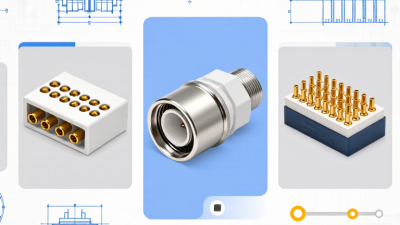
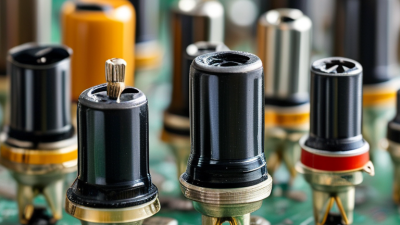
Female connector types differ in structure, contact method, and working environment. Receptacle connectors accept male pins and often provide stable alignment during repeated mating. Crimp-style sockets use terminals pressed onto wires, creating a practical connection for harness production. Solder sockets need more manual skill, but they suit prototypes and small repair jobs. PCB female headers mount directly onto circuit boards, with common pitches ranging from 2.54 mm to finer spacing. Coaxial female connectors are designed for shielded signal paths and controlled impedance.

Key features deserve careful attention. Check rated voltage, current, contact resistance, and operating temperature before selection. A locking tab can prevent separation when equipment vibrates. Gold-plated contacts may improve durability in low-level signal applications, while tin-plated contacts often support economical power connections. Waterproof versions use seals around the cable entry. However, an IP rating does not guarantee performance after poor assembly. I have seen loose crimping cause heat buildup, even when the connector looked secure. No connector is perfect.

Tips: Match the socket to the pin size, wire gauge, and housing system. Inspect the terminal after crimping. It should hold firmly without cutting the conductor. Leave enough cable slack near moving parts. This small detail reduces strain. Suppliers should provide drawings, test data, and sample pieces before volume orders. A sample can reveal insertion force, latch weakness, or unexpected clearance problems that specifications may miss.
How Female Connectors Are Manufactured and Tested

Female connectors are manufactured through several controlled operations. Engineers begin by selecting copper alloys for conductivity, strength, and spring performance. Metal strips are stamped into contacts with carefully measured profiles. The contacts are then plated to reduce oxidation and stabilize electrical performance. Plating thickness must remain consistent, even around narrow contact areas.

Insulating housings are commonly molded from heat-resistant polymers. Molding pressure, temperature, and cooling time affect dimensional accuracy. A small distortion can prevent proper mating. Assembly teams inspect contact alignment under magnification and verify locking features by hand. Small flaws matter. Automated vision systems help, but human inspection still catches unusual defects.

Testing combines electrical, mechanical, and environmental checks. Continuity testing confirms that each contact carries current through the intended path. Insulation resistance and dielectric withstand tests identify unwanted leakage or breakdown. Technicians also measure insertion and withdrawal forces because excessive force may damage equipment. Samples undergo vibration, temperature cycling, humidity exposure, and corrosion testing. Results are recorded against defined specifications, not personal judgment. However, laboratory conditions cannot represent every installation. Field feedback remains valuable, especially when connectors face dust, repeated movement, or uneven alignment. Manufacturers should review failed samples honestly and adjust tooling, materials, or inspection methods when evidence demands it.

Criteria for Comparing Connector Manufacturers and Suppliers

Top Female Connector Manufacturers and Suppliers

Comparing female connector manufacturers requires more than checking price and catalog size. According to Grand View Research’s 2024 analysis, the global electrical connectors market reached about $84.72 billion in 2023. It is expected to grow at roughly 6.3% annually through 2030. This growth increases supplier choices, but not necessarily supplier quality. Review contact resistance, mating cycles, insulation materials, temperature ratings, and IP protection. Ask for test reports linked to specific part numbers. Generic certificates are weak evidence.

Manufacturing control matters equally. Reliable suppliers should explain material traceability, mold maintenance, change notification, and corrective-action procedures. Check whether production follows relevant IEC, UL, or IATF requirements for your application. Request samples before approving volume orders. Test them under vibration, humidity, repeated mating, and thermal cycling. Lead time deserves careful review, too. A low quote may hide unstable supply, tooling charges, or expensive inspection work. In practice, technical support often separates a capable supplier from a merely available one. I may be too cautious here, but undocumented claims should reduce confidence.

Tips: Compare total cost, not unit price. Build a scorecard covering quality, delivery, documentation, customization, and response time. Record every supplier’s evidence. Recheck assumptions after pilot testing. Small samples can expose large problems.

Top Female Connector Manufacturers and Suppliers - Criteria for Comparing Connector Manufacturers and Suppliers
Comparison Category Evaluation Criterion Relevant Benchmark or Technical Data What to Verify with the Supplier Priority Typical Evidence
Product Portfolio Female connector formats Availability of wire-to-wire, wire-to-board, board-to-board, circular, rectangular, coaxial, automotive and industrial female connector designs. Check whether the supplier offers the required mating interface, contact arrangement, housing style and termination method. High Product catalogue and technical drawings
Electrical Performance Rated current and voltage Common low-voltage connector families may range from signal-level ratings below 1 A to power ratings of several hundred amperes, depending on contact size and design. Confirm rated current, rated voltage, derating curves, creepage distance and clearance for the intended application. High Electrical specification sheet and test report
Mechanical Design Contact count and pitch Commercial connector families commonly use pitches from approximately 0.5 mm to 5.08 mm, with larger pitches generally supporting higher current or easier assembly. Verify pin count, pitch tolerance, keying, polarization, mating orientation and PCB footprint compatibility. High 2D drawing, 3D CAD model and sample inspection
Reliability Mating and unmating durability Connector durability varies widely; compact signal connectors may be rated for dozens to hundreds of cycles, while rugged designs can be rated for thousands of cycles. Compare the specified mating-cycle rating with the required service life and confirm the test method used. High Durability test report and product specification
Environmental Resistance Operating temperature Many industrial connector products are designed for approximately -40°C to +85°C, while specialized automotive and industrial products may support ranges up to about +125°C or higher. Confirm temperature limits for the complete assembly, including housing, terminals, seals and cable insulation. High Temperature rating and environmental test data
Environmental Resistance Ingress protection Sealed connector assemblies may be tested to IP ratings such as IP65, IP67 or IP68; the actual rating depends on the fully mated system and installation conditions. Verify whether the IP rating applies to the connector, cable assembly or complete installed product. High Ingress-protection test certificate
Materials Housing and contact materials Common housings use engineering thermoplastics such as PA, PBT or LCP; contacts commonly use copper alloys with tin, nickel or gold plating. Review material grades, flammability rating, plating thickness, corrosion resistance and compatibility with the operating environment. High Material declaration and plating specification
Safety and Compliance Flammability performance UL 94 classifies the flammability performance of plastic materials; V-0, V-1 and V-2 are commonly referenced vertical-burning classifications. Confirm the exact resin grade and whether the flammability classification applies to the supplied connector housing. High UL 94 material documentation
Regulatory Compliance Restricted substances RoHS and REACH documentation is commonly required for electrical and electronic connector components sold into regulated markets. Request current declarations covering restricted substances, substances of concern and any applicable exemptions. High RoHS declaration and REACH statement
Quality Management Manufacturing quality system ISO 9001 is a widely used quality-management standard. Automotive supply chains may additionally require IATF 16949 or customer-specific quality controls. Check certificate scope, issuing body, expiry date, manufacturing site and corrective-action process. High Valid third-party certificate
Production Capability Tooling and customization Custom female connectors may require tooling for housings, terminals, seals or overmolding; tooling complexity depends on cavity count and material selection. Evaluate design-for-manufacturing support, tooling ownership, engineering-change control and prototype capability. Medium Tooling plan, samples and engineering review
Supply Reliability Capacity and lead time Lead times vary according to product type, tooling status, order quantity and component availability; standard products generally have shorter lead times than custom designs. Compare quoted lead time, monthly capacity, minimum order quantity, safety-stock options and continuity plans. High Capacity statement and written quotation
Quality Control Inspection and traceability Important controls include dimensional inspection, crimp-force monitoring, contact resistance testing, dielectric withstand testing and lot traceability. Confirm inspection frequency, sampling plan, batch identification, retention of records and nonconforming-product controls. High Control plan, inspection report and sample labels
Commercial Evaluation Total cost of ownership Total cost includes unit price, tooling, packaging, freight, testing, assembly labor, field replacement and possible redesign costs. Compare equivalent specifications rather than unit price alone, including warranty terms and supply-continuity risk. High Itemized quotation and cost model
Technical Support Engineering and after-sales service Effective support should cover connector selection, mating compatibility, crimping guidance, failure analysis and engineering-change communication. Assess response time, local technical support, application-engineering resources and documented complaint-handling procedures. Medium Support agreement and technical contact details

Leading Female Connector Manufacturers and Supplier Profiles

Leading Female Connector Manufacturers and Supplier Profiles

Female connectors, often called receptacles, support secure mating in automotive, industrial, medical, and communication systems. A credible manufacturer profile should explain contact materials, plating thickness, housing resin, current ratings, and testing methods. These details matter more than polished catalog language. Grand View Research valued the global electrical connectors market at approximately USD 84.2 billion in 2023. Its report forecasts a 6.8% compound annual growth rate from 2024 to 2030. Demand is rising with vehicle electrification, factory automation, and high-speed data equipment.

The strongest suppliers publish dimensional drawings, tolerance limits, salt-spray results, and traceability records. They also clarify minimum order quantities and sample lead times. In my sourcing experience, production consistency often separates a useful supplier from a cheap one. MarketsandMarkets identifies automotive electronics and data infrastructure as major connector growth areas. Yet supplier claims can vary widely. Independent validation remains necessary. One weakness in many profiles is limited information about crimp-force control and field failure rates. Buyers should ask for both.

Tips: Compare mating cycles, temperature ranges, vibration performance, and compliance documents. Request ten to twenty samples before approval. Inspect terminal retention with practical pull tests. Do not rely on one laboratory report. A connector may pass a short test but fail after repeated heat and moisture exposure. Suppliers with responsive engineering support usually provide clearer corrective-action records. Still, responsiveness is not proof of quality. Verify it through audits, pilot runs, and documented inspection data.

Applications and Emerging Trends in Female Connector Technology

Female connectors are essential in power, signal, and data systems. Their recessed contacts help reduce accidental touch during assembly and maintenance. Engineers use them in control cabinets, medical instruments, electric vehicles, and industrial sensors. In field testing, secure locking matters as much as electrical performance. A connector that loosens under vibration can create intermittent faults.

Emerging designs focus on higher density, faster data transfer, and smaller footprints. Shielded female connectors support cleaner signals in crowded automation panels. Sealed versions protect contacts from dust, moisture, and cleaning chemicals. Modular systems also let manufacturers replace damaged inserts instead of entire assemblies. Thermal management is becoming important as compact devices carry more current. However, smaller housing does not always mean better performance. Heat, bending, and installation errors still cause failures. This is where supplier testing and documentation become valuable. I have found that clear drawings often prevent more problems than attractive specifications.

Tips: Check mating cycles, contact plating, current ratings, and operating temperature. Confirm cable size before ordering. Request sample testing under real vibration and humidity conditions. Keep installation records. Small details matter. Also, review supplier traceability and inspection methods. A reliable source should explain test procedures, material grades, and tolerances without vague promises. Some projects still overlook repair access, which can increase service time later. Designing for maintenance may feel slower at first, but it often reduces avoidable replacement costs.

Top Female Connector Manufacturers and Suppliers: Applications and Emerging Trends in Female Connector Technology

High-speed female connector interfaces are increasingly used in data centers, industrial equipment, automotive systems, consumer electronics, and professional displays. The chart compares maximum signaling rates specified by widely adopted interface standards. USB4 Version 2.0 and DisplayPort 2.1 reach up to 80 Gbps, reflecting the industry shift toward higher bandwidth, compact reversible connections, and improved support for high-resolution video and data-intensive applications. Actual performance depends on the connector design, cable, host device, and implementation.