Leave Your Message
-
 Email
-
 WeChat

Choosing the right Pin Header Socket manufacturer can influence assembly quality, product reliability, and long-term procurement costs. For global buyers, the decision involves more than comparing catalog prices. Contact plating, insulation materials, mating cycles, dimensional tolerance, and production consistency all deserve careful attention.
This guide examines 10 Best Pin Header Socket Manufacturers for Global Buyers through a practical purchasing lens. It considers manufacturing experience, engineering support, quality-control procedures, customization capacity, and international supply capabilities. A dependable supplier should provide clear drawings, traceable material information, realistic lead times, and samples that match mass-production specifications. Small details matter. A socket that fits smoothly during testing may perform differently after thousands of mating cycles.
Performance comes first.
The selected manufacturers represent different strengths, including standard connector ranges, high-density designs, automated production, and application-specific solutions. Their suitability may vary across industrial controls, consumer electronics, automotive systems, and communication equipment. No ranking can fit every project. That limitation matters.
Buyers should verify current certifications, inspection records, packaging methods, and warranty terms directly with each supplier. Factory audits, sample testing, and pilot orders can reveal issues that a polished website may not show. Even experienced procurement teams can overlook contact resistance, storage conditions, or connector orientation during evaluation. This overview offers a reliable starting point, not a substitute for technical validation. Careful comparison can reduce sourcing risks and support a more stable global supply chain.
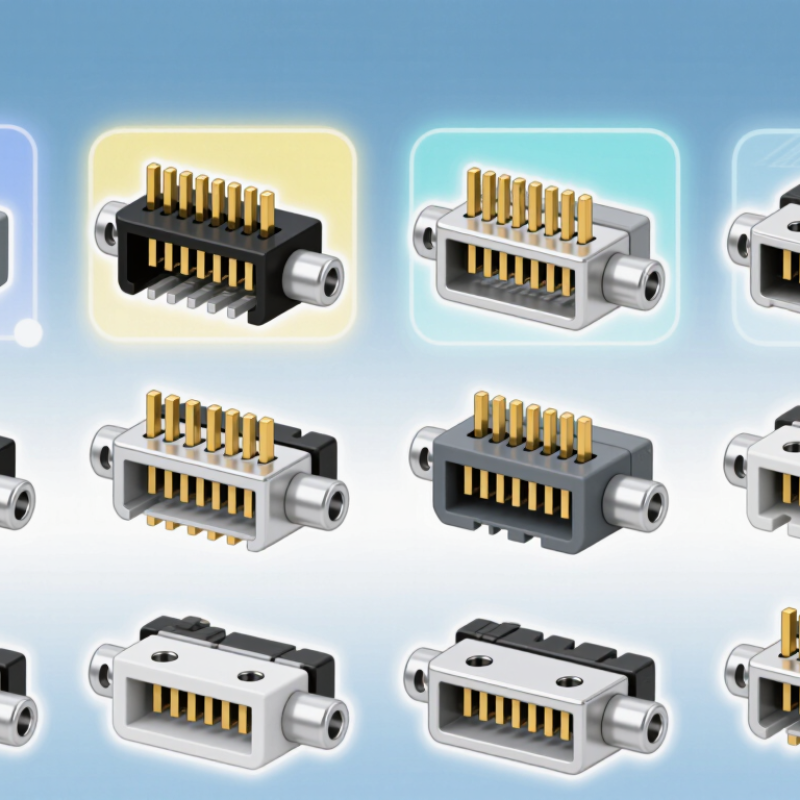
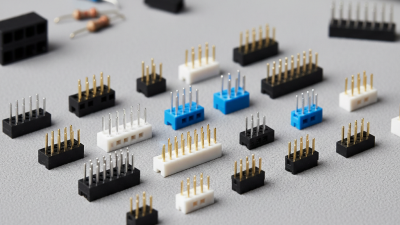
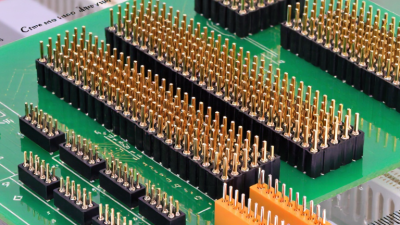
Pin header sockets are female connectors designed to receive the exposed pins of a pin header. Their spring contacts create a detachable electrical and mechanical connection between circuit boards, wires, and modules. Common versions use 2.54 mm pitch, but compact equipment may require 2.00 mm or 1.27 mm spacing. Single-row and double-row formats support different layouts.
Global buyers use these sockets because they simplify assembly, testing, repair, and product upgrades. A removable socket allows technicians to replace a control module without desoldering the entire board. In production reviews, I check contact plating, insulation material, rated current, operating temperature, and mating-cycle performance. Small details matter. A socket may fit perfectly but fail after repeated insertion.
International sourcing also requires consistent drawings, sample approval, traceability, and dependable packaging. Moisture-resistant bags and clear lot labels can prevent confusion during long shipments. Buyers should request dimensional tolerances, material declarations, and test reports for each selected series. Compliance requirements may differ by market, so documentation must match the destination country. A low unit price can look attractive, yet unstable contact force may create expensive field failures. I have seen this happen. Procurement teams should also confirm delivery capacity, custom plating options, and compatibility with automated assembly. No single specification fits every application.
Pin header sockets are female connectors designed to mate with male pin headers. The comparison below summarizes common socket configurations, materials, standards, and sourcing considerations used by global buyers when evaluating manufacturers.
| No. | Socket Configuration | Typical Pitch | Contact Arrangement | Mounting Method | Insulator Material | Contact Material and Plating | Common Electrical Rating | Relevant Compliance | Typical Buyer Application |
|---|---|---|---|---|---|---|---|---|---|
| 1 | Single-row straight socket | 2.54 mm | 1 × 02–40 positions | Through-hole or surface-mount | UL 94V-0 thermoplastic | Copper alloy; tin or gold plating | Commonly up to 3 A and 100–250 V AC/DC, subject to design | RoHS, REACH, UL or equivalent documentation | PCB programming, development boards, control modules |
| 2 | Dual-row straight socket | 2.54 mm | 2 × 02–50 positions | Through-hole or surface-mount | Glass-filled or standard thermoplastic | Copper alloy; selective gold or tin finish | Often rated around 1–3 A per contact | RoHS, REACH and customer-specific quality reports | Board-to-board assemblies and embedded controllers |
| 3 | Low-profile single-row socket | 2.00 mm or 2.54 mm | 1 × 02–30 positions | Through-hole or SMT | High-temperature thermoplastic | Copper alloy with tin or gold over nickel | Typically up to 2–3 A, depending on pitch and temperature | RoHS, REACH and flammability documentation | Compact industrial electronics and portable devices |
| 4 | Dual-row low-profile socket | 2.00 mm | 2 × 02–40 positions | SMT or through-hole | High-temperature nylon or LCP | Copper alloy; gold-plated mating area | Commonly 1–2 A per contact | RoHS, REACH and SMT process compatibility data | Space-constrained controller and sensor boards |
| 5 | Elevated or stackable socket | 2.54 mm | Single or dual row | Through-hole, with varied stack height | UL 94V-0 thermoplastic | Copper alloy; tin or gold contact finish | Usually up to 3 A per contact | RoHS, REACH and mechanical drawing control | Modular boards, shielded boards and mezzanine systems |
| 6 | Right-angle socket | 2.54 mm or 2.00 mm | Single or dual row | Through-hole or SMT | Thermoplastic rated for soldering temperatures | Copper alloy; tin or selective gold plating | Commonly up to 1–3 A per contact | RoHS, REACH and dimensional inspection records | Edge connections and cables entering from the side |
| 7 | Shrouded or boxed socket | 2.54 mm | Typically 2 × 02–20 positions | Through-hole or SMT | UL 94V-0 high-temperature polymer | Copper alloy; gold-plated mating surface | Often up to 1–3 A per contact | RoHS, REACH and keyed-polarization verification | Ribbon-cable interfaces and keyed board connectors |
| 8 | Ejector or latching socket | 2.54 mm | Usually dual row | Through-hole | Reinforced thermoplastic | Copper alloy; gold-plated mating contacts | Commonly up to 1–3 A per contact | RoHS, REACH and retention-force testing | Vibration-sensitive equipment and removable modules |
| 9 | Machine-pin precision socket | 2.54 mm or 2.00 mm | Single or dual row | Through-hole or SMT | Precision-molded thermoplastic | Machined copper alloy; gold-plated contact area | Often supports stable low-level signal connections | RoHS, REACH and tighter dimensional tolerances | Test fixtures, prototypes and repeated mating cycles |
| 10 | High-temperature automotive-grade socket | 2.54 mm or application-specific | Single or dual row | Through-hole or SMT | High-temperature nylon or LCP | Copper alloy; corrosion-resistant plating | Rating depends on temperature, current and derating curve | RoHS, REACH, IATF-related quality systems and application testing | Vehicle control units, sensors and industrial equipment |
Buyer note: Electrical current, voltage, operating temperature, mating-cycle life and compliance status vary by exact part number. Global buyers should request drawings, material declarations, test reports, sample approvals and applicable quality certificates before placing a production order.