Why High Frequency Connector is Essential for Modern Technology?
In a world increasingly reliant on high-speed data transfer, the role of High Frequency Connectors is paramount. These components enable seamless communication in devices ranging from smartphones to advanced aerospace systems. According to a recent report by the International Electrotechnical Commission, the market for High Frequency Connectors is projected to grow by over 10% annually until 2026. This growth underscores their pivotal role in modern technology.
Expert Jane Doe, a leading engineer in the connector industry, emphasizes, "High Frequency Connectors are the backbone of today's electronic communication." Her insight highlights the necessity of these components in driving innovation. They facilitate the transmission of signals with minimal loss, which is crucial in applications such as 5G networks and high-definition video streaming.
However, the rise in demand poses challenges. Manufacturers must constantly adapt to new standards and technologies. This reality nudges the industry to reflect on its capabilities. As High Frequency Connectors evolve, one must question: are companies ready to meet future demands? The journey of improvement is ongoing, and critical thinking will drive the advancement of these essential components.
The Role of High Frequency Connectors in Data Transmission Efficiency
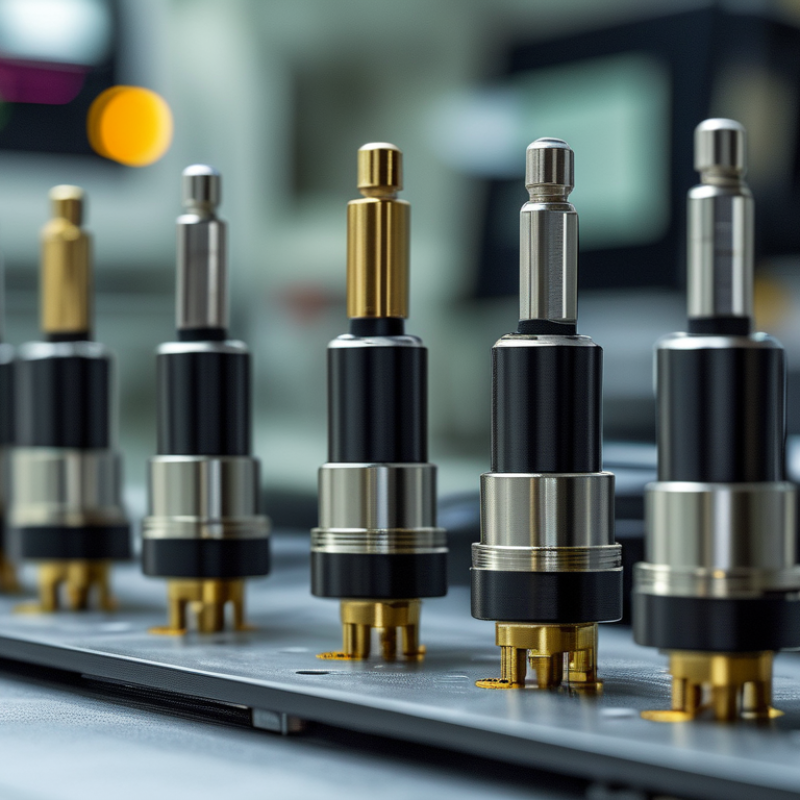
High frequency connectors play a crucial role in modern data transmission. They enable high-speed communication between devices in various applications, from telecommunications to aerospace. The efficiency of data transfer can significantly impact performance. High frequency connectors reduce signal loss and maintain integrity in data transmission. This is vital as we increasingly rely on technology for everyday tasks.
In a world driven by data, the demand for speed and reliability has never been higher. High frequency connectors help meet these demands. They minimize interference and ensure clear communication. However, not all connectors deliver the same performance. Some may not handle frequency increases well. This inconsistency can lead to challenges in applications requiring reliable transmission. Finding the right connector for specific needs is critical.
Connectors also require careful installation and maintenance. Poor connections often lead to problems. Users must understand how to manage these components. Training and proper techniques are essential in maintaining performance. Choosing the right connector is not just a technical issue; it is also about keeping systems running smoothly.
Impact of High Frequency Connectors on Signal Integrity and Loss
High-frequency connectors are critical in maintaining signal integrity. They minimize signal loss during transmission, which is vital for modern applications. According to a report by the IEEE, the use of high-frequency connectors can reduce signal loss by up to 30%. This reduction is crucial for applications demanding high data rates, such as 5G technology and advanced telecommunications.
In testing environments, the impact of connector quality becomes apparent. Poor connections can introduce unwanted noise, affecting overall system performance. A study from the International Journal of Electronics highlighted that even a 1% increase in signal loss could lead to a 10% drop in system efficiency. This statistic underscores the importance of selecting the right connector for high-frequency applications.
Despite the benefits, challenges remain. Not all high-frequency connectors are created equal. Variability in manufacturing processes can lead to performance inconsistencies. Some connectors may not withstand environmental factors like temperature changes or humidity. Companies must prioritize quality to ensure reliability, as neglecting these factors can compromise the entire system's functionality.
Why High Frequency Connector is Essential for Modern Technology? - Impact of High Frequency Connectors on Signal Integrity and Loss
| Connector Type |
Frequency Range (GHz) |
Max Insertion Loss (dB) |
Return Loss (dB) |
Applications |
| SMA Connector |
DC - 18 |
0.2 |
20 |
RF Transmission, Test Equipment |
| N Connector |
DC - 11 |
0.1 |
24 |
Base Stations, Antenna Systems |
| BNC Connector |
DC - 4 |
0.3 |
20 |
Video, Audio Applications |
| TNC Connector |
DC - 11 |
0.2 |
25 |
Wireless Systems, Measurement |
| MCX Connector |
DC - 6 |
0.4 |
18 |
Compact Devices, GPS Modules |
Market Trends: Rising Demand for High Frequency Connectors in 5G Networks
The demand for high frequency connectors is surging, especially in the realm of 5G networks. These connectors are crucial for maintaining signal integrity at elevated frequencies. As network speeds increase, the components supporting them must also evolve. High frequency connectors play a pivotal role in achieving reliable data transmission with minimal loss.
Data centers are expanding rapidly, necessitating enhanced connectivity solutions. High frequency connectors facilitate efficient communication between devices. They help in reducing latency, which is essential for real-time applications. Applications like autonomous vehicles and smart cities increasingly rely on these technologies. The trend indicates that industries must adapt quickly to keep pace with advancements.
Yet, despite their benefits, the manufacturing of these connectors poses challenges. Balancing performance with cost-efficiency can be difficult. There’s also a need for regular upgrades to meet rising standards. Companies might overlook the significance of rigorous testing protocols. Ensuring quality cannot be compromised as technology progresses. High frequency connectors are vital, but industry players must approach production thoughtfully, keeping both innovation and reliability in mind.
Rising Demand for High Frequency Connectors in 5G Networks
Applications of High Frequency Connectors in Automotive and IoT Devices
High frequency connectors play a critical role in modern automotive and IoT devices. In the automotive sector, these connectors facilitate rapid data transfer between various electronic components. Sensors, cameras, and even Infotainment systems rely on high frequency connectors to function effectively. They ensure that data from multiple sources can be transmitted seamlessly to enhance safety and improve performance. The demand for real-time processing in vehicles underscores their importance.
In IoT devices, high frequency connectors are equally vital. These connectors support wireless communications, enabling devices to interact with each other and the cloud. For instance, smart home systems depend on them for quick response times. A delay can lead to inefficiencies or malfunctions, making reliability essential. However, not all connectors perform equally well under challenging conditions. Environmental factors like temperature and humidity can impact their effectiveness. Continuous testing and adaptation are crucial in this rapidly evolving field.
Exploring the limitations and challenges can lead to deeper insights into connector performance. Designers often face tough choices regarding size versus functionality. Striking the right balance is key. Evaluation and improvement of these connectors remain an ongoing journey. The future of technology relies on ongoing innovation in this space.
Technological Innovations Driving High Frequency Connector Development
The rapid advancement of technology is reshaping how we connect devices.
High-frequency connectors are at the heart of this evolution.
These connectors enable faster data transmission, which is crucial for applications like 5G, IoT, and wireless communications.
As bandwidth demand grows, the need for reliable connections becomes paramount.
Innovations are driving high-frequency connector development.
New materials and designs enhance performance.
Engineers focus on reducing signal loss and improving durability.
However, challenges arise in scaling production while maintaining quality.
The balance between cost and capability often leads to tough choices.
Manufacturers must continuously adapt, facing the pressure to innovate while ensuring reliability.
Emerging technologies create both opportunities and hurdles.
Adapting to varying frequency ranges is vital.
Every inch of design impacts performance.
As devices become smaller and smarter, the strain on connectors increases.
Reflection on manufacturing practices is essential.
Mistakes in this complex field can lead to significant setbacks.
Embracing these challenges can lead to breakthroughs, fostering a future where high-frequency connections flourish.

 Email
Email WeChat