Leave Your Message

2026 Top 4 Pin Header Socket Suppliers Worldwide?

The 2026 market for 4 Pin Header Socket products is becoming more specialized and quality-driven. Buyers now expect stable electrical performance, accurate dimensions, and dependable delivery. This guide reviews four leading suppliers worldwide through practical purchasing criteria, not promotional claims alone.

Each supplier is examined for connector design, contact plating, housing materials, pitch accuracy, and insertion-cycle performance. Manufacturing experience matters when sockets must fit tightly on crowded circuit boards. Laboratory data also deserves attention. Reliable suppliers should provide inspection records, material details, product drawings, and traceable batch information. Evidence matters.

The comparison also considers customization support, minimum order quantities, sampling speed, packaging, and international logistics. A strong supplier should communicate clearly when tolerances, temperature ratings, or mounting requirements change. Small details matter. A socket that looks identical may perform differently after repeated mating or exposure to humidity. Buyers should verify samples before approving large orders, especially for automated assembly lines.

No ranking can suit every application. Cost may dominate a prototype project, while consistency may matter more in industrial equipment. That distinction is sometimes overlooked. Supplier websites can also present incomplete information, so independent testing and documented customer feedback remain valuable. This article therefore offers a balanced starting point for engineers, distributors, and purchasing teams seeking dependable 4 Pin Header Socket suppliers in 2026. Fit comes first. Performance must be proven.
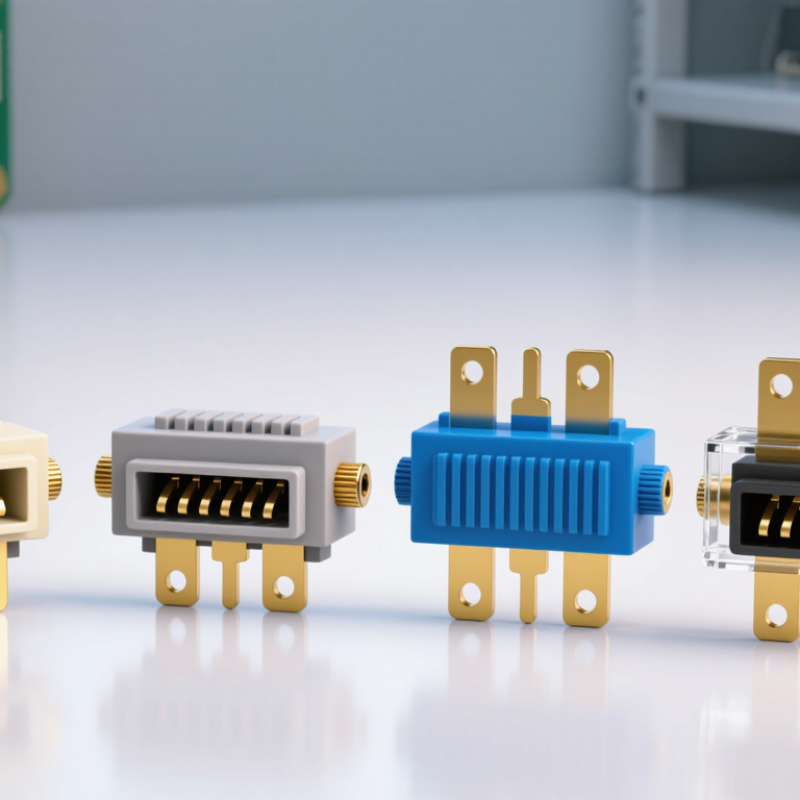
2026 Top 4 Pin Header Socket Suppliers Worldwide?

What Are Pin Header Sockets and Why Do They Matter?

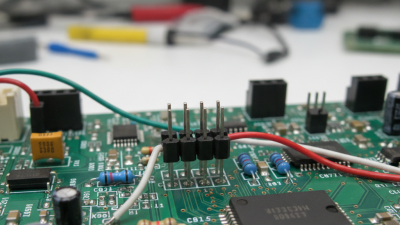
Pin header sockets are compact, removable connectors that accept matching pin headers on circuit boards and cable assemblies. Their value is practical: they allow inspection, replacement, and testing without repeated soldering. In field service, this can reduce board damage and shorten maintenance time. Their open, modular structure also supports prototyping, control systems, instrumentation, and industrial electronics.

Market data shows why these small parts matter. Grand View Research estimated the global connectors market at more than USD 80 billion in 2023, with electronics and communication equipment among major application areas. A 2024 report from MarketsandMarkets also identified rising demand for compact, high-density interconnects in automation and connected devices. These reports do not isolate pin header sockets, but they indicate the wider demand surrounding reliable board-level connections. Selection still requires care. Pitch, contact count, current rating, insulation material, and mating cycles must match the application. A socket that fits mechanically may still fail electrically.

Tips: Check the pitch with a caliper, not only a product photo. Verify the rated current under real temperature conditions. For vibration, choose stronger retention and inspect the solder joints. One overlooked issue is alignment. Slight misalignment can bend pins or create intermittent signals. Design reviews should test actual mating force, though many teams skip this step when schedules tighten. That shortcut deserves reconsideration.

2026 Top 4 Pin Header Socket Suppliers Worldwide? - What Are Pin Header Sockets and Why Do They Matter?

Pin header sockets are board-to-board or wire-to-board interconnection components designed to receive standard pin headers. The benchmark below uses anonymous supplier profiles and commonly verified industry specifications rather than company or brand names.

Rank Anonymous Supplier Profile Primary Market Coverage Common Pitch Options Typical Contact Rows Typical Mounting Styles Common Materials Typical Compliance Requirements Best-Fit Applications
1 Global High-Volume Supplier Worldwide OEM and contract-manufacturing supply 2.54 mm, 2.00 mm, 1.27 mm 1 to 40 positions per row; single and double row Through-hole, vertical SMT, right-angle UL 94-rated thermoplastic insulator; copper-alloy contacts RoHS, REACH, and customer-specific quality documentation Industrial controls, computers, automation, and consumer electronics
2 Miniature and High-Density Supplier Global electronics and compact-device programs 1.27 mm, 1.00 mm, 0.80 mm 2 to 80 positions; single, double, and stacked rows SMT, through-hole, vertical, and right-angle High-temperature thermoplastic; tin- or gold-plated contact surfaces RoHS, REACH, halogen-free options, and SMT-process compatibility Wearables, embedded systems, telecommunications, and portable devices
3 Customized Industrial Supplier Regional and international industrial-equipment projects 2.54 mm, 2.00 mm, custom pitch designs 2 to 64 positions; shrouded and unshrouded versions Through-hole, right-angle, elevated, and board-stacking types Thermoplastic or thermoset insulators; copper-alloy terminals RoHS, REACH, UL flammability requirements, and customer validation testing PLC systems, motor drives, measurement equipment, and power controls
4 Prototype and Flexible-Volume Supplier Small-batch, prototype, and mid-volume international orders 2.54 mm, 2.00 mm, 1.27 mm 2 to 40 positions; standard and custom configurations Through-hole, SMT, vertical, and right-angle Standard thermoplastic housings; tin, nickel, or gold contact plating RoHS and REACH documentation; sample inspection reports Development boards, test fixtures, prototypes, and low-volume assemblies
Why pin header sockets matter: They provide a detachable and serviceable electrical connection, simplify PCB assembly, support modular board design, and allow compatible pin-header interfaces to be replaced without soldering directly to the circuit board.

Note: Electrical ratings such as current, voltage, contact resistance, mating cycles, and operating temperature vary by contact size, plating, insulation material, and product design. Always confirm the supplier's current datasheet and qualification documents before purchase.
How to Evaluate Global Pin Header Socket Suppliers

2026 Top 4 Pin Header Socket Suppliers Worldwide?

How to Evaluate Global Pin Header Socket Suppliers

The connector market is expanding, but supplier quality remains uneven. MarketsandMarkets projects the global connector market to grow from about USD 84.6 billion in 2024 to USD 112.7 billion by 2029. This growth increases sourcing options, not purchasing certainty. Evaluate suppliers through documented evidence, not catalog photographs.

Check housing resin, contact plating, pitch tolerance, and rated current first. Ask for test reports covering contact resistance, insulation resistance, dielectric strength, and mating cycles. A socket with gold-plated contacts may perform better in humid equipment, but plating thickness matters. Request batch-level traceability and material declarations for RoHS and REACH compliance. IPC quality guidance also supports controlled processes, inspection records, and measurable defect targets.

Delivery capability deserves equal attention. Request average lead time, minimum order quantity, tooling ownership, and recent on-time delivery data. Test samples in your actual board design. Measure insertion force with a simple gauge. Then inspect solder joints after thermal cycling. A low quotation can still become expensive after field failures. I have seen teams overvalue unit price and undervalue change control. That judgment is imperfect. Supplier audits should review calibration records, incoming inspection, operator training, and corrective-action speed. Grand View Research estimates continued connector-market growth through 2030, so capacity claims should be verified with production schedules, not promises.

The Four Leading Pin Header Socket Suppliers in 2026

The Four Leading Pin Header Socket Suppliers in 2026

In 2026, four supplier profiles stand out in the worldwide pin header socket market. The first focuses on high-volume production and stable delivery schedules. It usually serves consumer electronics and industrial control projects. The second specializes in customized socket designs, including unusual pitches, heights, and plating options. This is useful for compact circuit boards. The third supplier emphasizes harsh-environment performance. Its products often support vibration resistance, temperature stability, and repeated mating cycles. The fourth combines prototyping support with flexible small-batch manufacturing. That matters to engineers testing a new board.

Real purchasing experience shows that price alone can mislead. Contact resistance, housing material, terminal retention, and inspection records deserve equal attention. Reliable suppliers provide drawings, material declarations, sample reports, and traceability documents. They should also explain how they control crimping, molding, and final electrical testing.

I would not accept a polished catalog as proof. One overlooked detail can delay an entire assembly line. Some suppliers may also have slower technical replies than expected.

Tips: Request samples from all four supplier types. Check fit, insertion force, and solder compatibility. Compare tolerance data, not only unit prices. Ask about minimum order quantities and production capacity. Keep written specifications before approval. A short factory audit can reveal more than a sales presentation.

How the Top Suppliers Compare in Quality, Cost, and Delivery

2026 Top 4 Pin Header Socket Suppliers Worldwide?

A useful 2026 comparison should examine four supplier profiles, not only their advertised rankings. The first focuses on precision molding and stable plating quality. The second offers large-scale production with lower unit costs. The third specializes in customized sockets for compact control boards. The fourth competes through regional warehouses and faster delivery. Quality becomes visible in small details. Check contact resistance, pin alignment, housing strength, and plating thickness. Request recent inspection records, not generic certificates.

Cost needs a wider calculation. A cheap socket may require extra sorting, rework, or urgent replacement. That mistake can erase the original savings. Compare samples, tooling fees, packaging, minimum order quantities, and shipping terms. I once treated a low quotation as a strong advantage. It was not. The supplier later changed the delivery estimate after confirming production capacity.

Delivery performance depends on more than factory distance. Ask about monthly output, component availability, inspection schedules, and backup production lines. Suppliers with local inventory may shorten urgent shipments, while direct factories can provide better customization and traceability. Confirm lead times in writing. Also test a small batch before placing a larger order. A supplier that answers technical questions clearly is usually easier to manage. Still, communication alone proves little. Actual samples, consistent reports, and on-time records deserve greater weight.

How to Choose the Right Supplier for Your Application

2026 Top 4 Pin Header Socket Suppliers Worldwide: How to Choose the Right Supplier for Your Application

A strong 2026 shortlist should cover four supplier types: high-volume manufacturers, automotive-grade specialists, custom design houses, and rapid-sampling suppliers. Each serves a different risk profile. Grand View Research valued the global connectors market at USD 84.7 billion in 2023. It also forecasts a 6.7% CAGR through 2030. This growth increases choice, but not necessarily quality.

Check contact resistance, mating cycles, insulation material, plating thickness, and operating temperature. Request test evidence aligned with IEC 60512. For automotive projects, ask for PPAP support, lot traceability, and vibration data. For industrial controls, confirm the socket survives repeated insertion near its rated current.

A low unit price can become expensive after field failures. The difficult part is admitting that a familiar supplier may not fit a new application.

Tips: Compare three samples, not one. Measure actual retention force. Inspect solder tails under magnification. Ask for dimensional reports and material certificates. Supplier scorecards should include defect rates, lead-time stability, engineering response, and tooling ownership. Bishop & Associates’ 2024 connector forecast highlights continued regional demand differences, so local inventory can matter as much as factory capacity. Do not trust impressive catalogs alone. Some specifications remain vague. Ask again.