2026 Top Board To Board Connector Types and Uses?
In today's rapidly evolving technology landscape, selecting the right Board To Board Connector is crucial. These connectors play a vital role in enabling seamless communication between various electronic components. In 2026, the market will present diverse connector types with unique features and applications.
Board To Board Connectors come in different configurations, including stacking, edge, and mezzanine styles. Each type serves specific purposes and can impact device performance. Understanding their uses is essential for engineers and designers aiming for optimal solutions. However, with so many options available, the decision-making process can be overwhelming.
It's important to consider the evolving needs of devices. A standard connector may not meet future demands. Designers must reflect on their choices and anticipate advancements in technology. While some connectors may promise high performance, their limitations can affect project timelines and costs. Thus, careful evaluation of Board To Board Connector types is necessary for success.

Overview of Board to Board Connectors and Their Importance
Board to board connectors play a vital role in modern electronics. They facilitate communication between multiple printed circuit boards (PCBs). These connectors help devices function properly and enhance performance. Their importance cannot be overstated in compact designs.
When choosing a board to board connector, consider the application specifics. Different types have various pin counts, spacing, and orientations. Selecting the right one can significantly impact device reliability. Overlooking these details can lead to connection failures and device malfunctions.
Tip: Always examine the physical dimensions of connectors. A small miscalculation can lead to assembly issues. It's essential to ensure the connector fits the design perfectly.
Furthermore, be aware of the environmental conditions. Factors like humidity and temperature can affect connector performance. Regular testing under planned usage conditions is crucial. This will help identify any potential weaknesses early on.
Tip: Use connectors rated for your specific application. This simple step can prevent future problems and improve overall system integrity.
Overview of Board to Board Connectors and Their Importance
This chart illustrates the usage percentage of different types of board to board connectors in various applications. Each type of connector serves essential functions in electronic systems, facilitating connections between printed circuit boards while addressing specific performance requirements.
Common Types of Board to Board Connectors Used in 2026
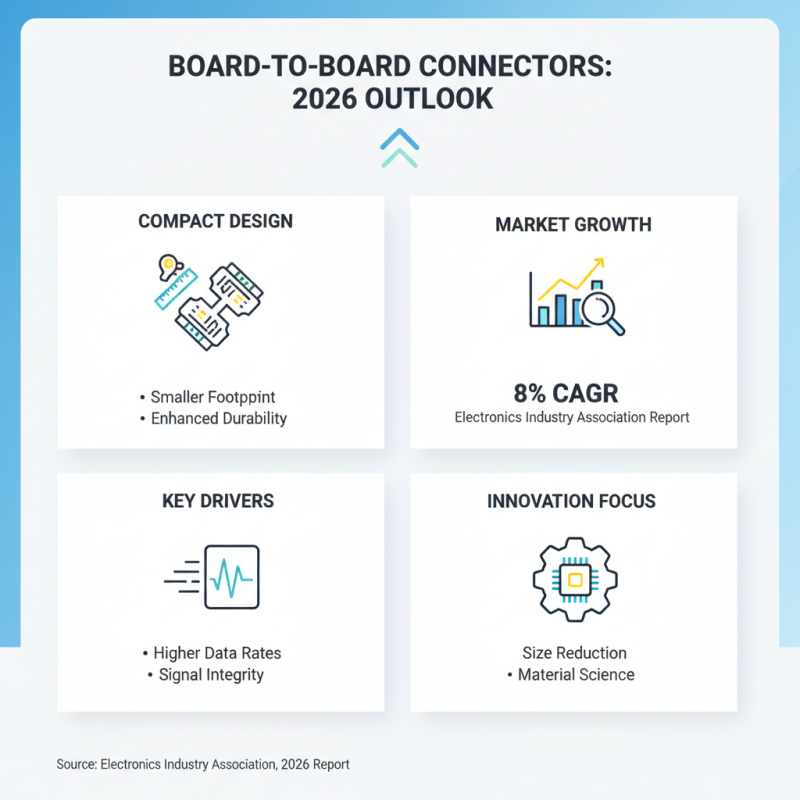
In 2026, the landscape of board-to-board connectors sees significant advancements. The demand for compact designs increases, prompting innovations in size and durability. The latest report by the Electronics Industry Association estimates a compound annual growth rate of 8% in this sector. This growth is driven by the need for higher data rates and enhanced signal integrity.
Commonly used types include mezzanine connectors and stacking connectors. Mezzanine options often feature diverse pin counts and heights, catering to space-constrained applications. Stacking connectors, known for stackable configurations, allow for flexible circuit designs. These connectors support various industries, such as telecommunications and consumer electronics. According to a survey, 70% of manufacturers favor connectors that minimize footprint while maintaining performance.
However, challenges remain. Many connectors struggle with thermal management and mechanical stability under stress. The industry is actively seeking solutions to address these issues. As designs grow more complex, engineers face difficulty in achieving the ideal balance between size and performance. The quest for reliable board-to-board connections continues to evolve.
Key Applications of Board to Board Connectors in Electronics
Board to board connectors are essential in modern electronics. They facilitate communication between different circuit boards in devices. These connectors enable compact designs and efficient signal transmission. They are widely used in various applications, such as smartphones, laptops, and wearable technology.
In smartphones, board to board connectors help link the mainboard with the display and battery. They play a crucial role in enhancing the overall functionality of the device. In laptops, these connectors allow for modular designs, improving upgradability. The growing trend towards thinner devices necessitates efficient connector types. Yet, designing reliable connections can be challenging due to limited space.
Wearable technology, like fitness trackers, also benefits from these connectors. They enable versatile designs and compact form factors. However, issues like signal interference are common. Designers must constantly balance size and performance. As technology evolves, the demand for innovative connector solutions will grow. Finding the right type for specific applications remains a key consideration.
Factors Influencing the Selection of Board to Board Connectors
When selecting board to board connectors, several factors come into play. One crucial aspect is the physical dimensions. Connectors must fit within the given space while ensuring reliable connections. Designers often face challenges when components are densely packed. Choosing the wrong size can lead to ineffective connections.
Another important factor is the number of pins required. This varies depending on the application. More pins can mean more robust connections, but space limits may hinder this. Additionally, the material composition influences heat resistance and electrical performance. High-quality materials can prevent degradation over time.
Flexibility is also essential. Applications evolve, and connectors need to adapt. Modular designs may offer advantages, allowing engineers to change configurations easily. However, this flexibility may introduce reliability concerns. Taking all these elements into account can help make informed decisions for specific projects while reflecting on the compromises involved.
2026 Top Board To Board Connector Types and Uses
| Connector Type |
Pin Count |
Pitch |
Applications |
Key Factors in Selection |
| ZIF Connector |
20-100 |
0.5mm - 1.0mm |
Mobile Devices, Laptops |
Ease of mating, Space-saving |
| HORIZONTAL Connector |
10-80 |
1.0mm - 2.54mm |
Consumer Electronics, Avionics |
Orientation, Robustness |
| VERTICAL Connector |
4-60 |
2.0mm - 2.54mm |
Industrial Applications, PCB boards |
Height, Insertion force |
| DIN Connector |
5-25 |
2.0mm - 5.0mm |
Audio Equipment, Telecommunications |
Signal integrity, Durability |
Future Trends in Board to Board Connector Technology and Design
The board-to-board connector industry is rapidly evolving. A recent report forecasts a 10% CAGR in this market through 2026. This growth highlights the rising demand for compact design solutions in electronics. As devices get smaller, the need for reliable interconnection solutions increases. Compact connectors enhance performance while saving valuable board real estate.
Future trends suggest a shift towards more advanced materials. Hybrid connectors are gaining popularity. These combine both electrical and optical functionalities. Such innovations reduce signal loss, a common issue with traditional connectors. Maintaining signal integrity is critical, particularly in high-speed applications. However, challenges remain in balancing performance and costs.
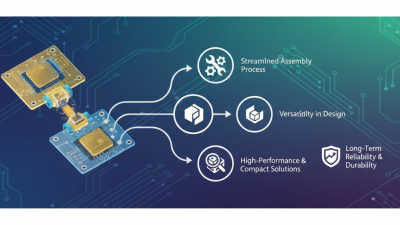
Design trends are prioritizing modularity and versatility. Flexible connectors can adapt to various applications. This shift may reflect a need for more user-centric designs. Yet, innovation often comes with trial and error. Companies must navigate strict regulations and evolving customer needs. The path forward requires both creativity and caution. Embracing these trends can lead to greater efficiency. However, manufacturers must also anticipate potential pitfalls in material selection and design complexities.

 Email
Email WeChat