

Choosing among China’s leading Automation Connector manufacturers takes more than comparing catalog prices. Buyers need to assess contact reliability, vibration resistance, sealing, current ratings, and production consistency. A connector may look robust on a product page, yet perform differently after repeated mating or exposure to oil and dust. Small details matter.
Quality expert W. Edwards Deming said, “Quality is everyone’s responsibility.” That principle applies to Automation Connector sourcing: design, materials, assembly, and inspection all affect performance. This guide examines ten Chinese manufacturers through practical considerations, including product range, customization, industry experience, certifications, and export support. These factors can help engineers and procurement teams build a useful shortlist.
A ranking is not a universal verdict. Supplier capabilities change, and a strong fit for a packaging line may not suit a robotic welding cell. Some public claims are difficult to compare directly. That deserves a closer look. Before ordering, request current technical documents, clarify test conditions, and evaluate samples under realistic operating loads. The aim here is not to promise a perfect supplier, but to make the search more informed—and to show which questions deserve attention before a connector reaches the production floor.
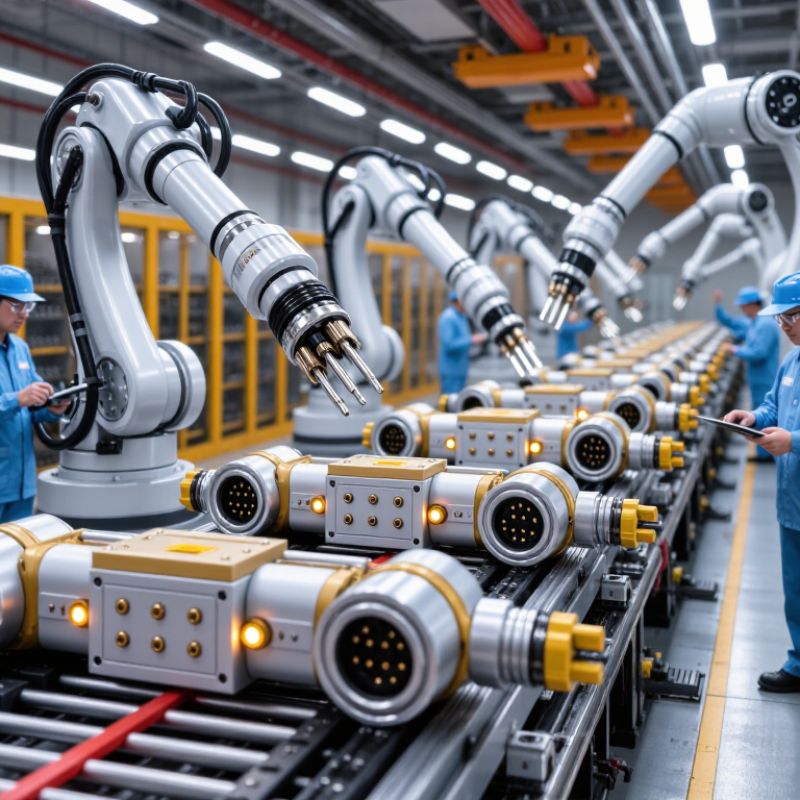
Automation connectors are electromechanical interfaces that carry power, signals, or data between machines and control equipment. In a production line, they may link a sensor beside a conveyor to a controller in a cabinet. Other connectors join motors, robotic arms, vision systems, and safety devices. Their housings, contacts, and locking features help maintain reliable connections amid vibration, dust, oil, or repeated movement. Small parts matter.
The right choice depends on the installation, not just the pin count. Engineers typically check current and voltage ratings, signal type, temperature range, ingress protection, and mating cycles. A connector that suits a fixed cabinet may loosen on a moving robot arm. Cable routing matters, too; a tight bend can strain the connection over time. This is easy to miss in a catalog. For sourcing in China, buyers can compare drawings, material specifications, sample fit, and documented test results across manufacturers. Still, a specification sheet cannot reveal every assembly issue. A practical trial in the intended environment may expose problems before a full production run. There is no universal best connector. The details deserve a second look.
Assessing an automation connector manufacturer in China starts with the application, not a product list. Define signal type, current, voltage, mating cycles, mounting space, and exposure to oil, dust, or vibration. Ask for drawings, material specifications, dimensional tolerances, and test reports tied to the exact part number. A generic certificate says little about one connector. Request samples from a normal production run, then inspect pin alignment, latch force, and cable retention. Small details matter. Compare supplier answers against your machine layout and operating conditions.
Review how quality is controlled across batches. Ask how incoming terminals are checked, how crimp height is monitored, and how failed units are recorded and corrected. If possible, review a traceability example linking a batch to inspection results and material lots. Check lead times, engineering response, change notification, and replacement-part consistency. A video call from the production floor can clarify processes, but it cannot replace independent testing. Be cautious with vague promises. It is also worth questioning your own assumptions: a low sample failure rate may hide variation across thousands of cycles. Consider documented evidence, realistic trials, and support after delivery.
China has a varied automation connector supply base, serving equipment builders, control-panel makers, and system integrators. The ten profiles below are anonymized capability snapshots, not a verified ranking of individual companies. Buyers should confirm current product specifications, testing methods, and production capacity directly with each supplier.
Details matter.
These are useful distinctions, but catalogs alone prove little. Compare drawings, material data, sample fit, and inspection records; even a polished specification sheet may leave real-world compatibility uncertain.
China’s automation connector makers differ less by headline ranking than by engineering focus. Some specialize in compact M8 and M12 connectors for sensors, valves, and narrow machine frames. Others build modular rectangular connectors for power, signal, and data in one housing. Heavy-duty options suit dusty production lines, while board-to-board products fit control cabinets and compact electronics. These distinctions matter when comparing products and industry specialties.
Demand is substantial: the International Federation of Robotics’ World Robotics 2024 report records 541,302 industrial robots installed worldwide in 2023, with 4.28 million operating units. More automated equipment means more connection points, but not every factory needs the same connector. A food-processing line may prioritize sealed housings and washdown resistance; a robotic cell may need vibration tolerance, secure locking, and flexible cable exits. Rankings can help shortlist suppliers, yet published ratings do not always show real-world cable life. That comparison remains imperfect.
Tips: Check current ratings, ingress protection, mating cycles, and wire-size limits against the actual machine environment. Ask for test documentation and sample parts. A connector that fits on paper may still be awkward to assemble.
The profiles below compare common automation-connector product specialisms rather than naming or ranking individual companies. They describe established product categories and typical applications; actual portfolios vary by manufacturer.
| Profile | Main product focus | Typical automation applications | Common specialty | Key selection checks |
|---|---|---|---|---|
| 1. Circular sensor connector specialist | M8 and M12 circular connectors, cordsets, field-attachable connectors | Proximity sensors, photoelectric sensors, actuators, and distributed I/O | Compact, keyed connections for factory-floor signal and low-power connections | Pin count, coding, current and voltage ratings, cable type, and ingress-protection rating |
| 2. Industrial Ethernet connector specialist | Shielded RJ45, M12 data connectors, Ethernet cordsets, panel interfaces | Industrial switches, PLC networks, machine vision, and networked control systems | Data connectivity designed for vibration, electromagnetic interference, and harsh environments | Supported data rate, shielding and grounding, connector coding, cable category, and network compatibility |
| 3. Heavy-duty rectangular connector specialist | Modular rectangular housings, inserts, contacts, and cable glands | Machine tools, production lines, control cabinets, and equipment interfaces | Combines power, signal, and—in compatible systems—data contacts in a single housing | Insert layout, contact material, rated current, housing size, locking method, and environmental rating |
| 4. Control-cabinet connector specialist | Terminal blocks, PCB terminals, feed-through connectors, and DIN-rail interfaces | Control panels, power distribution, PLC wiring, and electrical enclosures | Organized wiring and reliable connections between field circuits and cabinet equipment | Conductor size, connection method, rated voltage and current, spacing, and applicable approvals |
| 5. Servo and motor power connector specialist | Power connectors, motor feedback connectors, brake connections, and servo cable assemblies | Servo drives, motors, robotics, and CNC equipment | Power and feedback connections intended for motion-control equipment | Drive and motor compatibility, current rating, feedback pinout, cable flex life, and shielding |
| 6. Push-pull connector specialist | Push-pull circular connectors, panel receptacles, and pre-assembled cable sets | Compact machines, test equipment, medical devices, and industrial electronics | Quick mating and release where repeated connection or limited access is important | Locking design, mating-cycle rating, contact arrangement, sealing, and cross-mating compatibility |
| 7. Waterproof field-wiring connector specialist | Sealed cable connectors, junction connectors, inline couplers, and field-wiring accessories | Outdoor sensors, washdown areas, agricultural machinery, and exposed equipment | Protection against moisture and dust when correctly assembled and used within rated conditions | Ingress-protection rating, cable diameter range, temperature limits, sealing materials, and installation procedure |
| 8. Fiber-optic connector specialist | Industrial fiber connectors, adapters, patch cords, and ruggedized fiber assemblies | Long-distance links, electrically noisy environments, and industrial communication backbones | Optical data transmission that is not susceptible to electromagnetic interference in the same way as copper links | Fiber type, connector interface, insertion loss, bend radius, cleaning needs, and field-repair method |
| 9. Custom cable-assembly specialist | Pre-terminated sensor cables, harnesses, overmolded connectors, and custom lengths | OEM machinery, automated production cells, and installations requiring repeatable wiring | Factory-assembled cable solutions that can reduce on-site termination work | Wiring diagram, connector compatibility, cable jacket, length tolerance, testing, and traceability requirements |
| 10. High-current industrial connector specialist | Power contacts, heavy-duty plugs and sockets, battery connectors, and power cable assemblies | Industrial power distribution, material-handling equipment, and mobile machinery | Power transfer for equipment with higher current demands than typical sensor connections | Rated current at operating temperature, conductor size, contact resistance, touch protection, and mating safety |
Note: These are anonymized product-category profiles, not a verified ranking or company-by-company assessment. Confirm specifications, certifications, availability, and compatibility with the supplier before purchase.
Choosing a Chinese automation connector manufacturer takes more than comparing unit prices. Check whether the supplier can explain contact materials, plating thickness, insulation resin, and dimensional tolerances in clear terms. Ask for current drawings and a sample lot, then test the connectors with your own cable and mating components. Measure fit, retention, and continuity; repeat connections to spot early wear. A neat PDF proves little. If the supplier cannot explain a failed test or propose a corrective action, treat that as useful evidence.
Review how the factory controls incoming materials, crimping, molding, and final inspection. Request examples of inspection records and ask how batches are traced if a defect appears. Confirm that any quality certificates are current and cover the relevant production site and processes. Check lead times, minimum order quantities, tooling charges, packaging, and how design changes affect delivery. Small details matter. I would not treat one successful sample as proof of stable production; that shortcut is tempting, but weak. Clear technical answers and consistent records are stronger signs of a dependable supplier.