Top Industrial Connector Tips for Optimal Performance?
In today's rapidly evolving industrial landscape, the significance of reliable connections cannot be overstated. Industrial connectors serve as the backbone of many systems, ensuring seamless communication and power distribution. According to a recent report by MarketsandMarkets, the global industrial connector market is projected to reach USD 8.92 billion by 2026, growing at a CAGR of 5.3%. This growth reflects the increasing demand for efficient and robust solutions in various sectors, including manufacturing, transportation, and energy.
However, achieving optimal performance with industrial connectors requires careful consideration. It's not just about selecting the right type; attention to environmental factors is crucial. Factors like temperature, moisture, and vibration can severely impact connector reliability. A study from the Institute of Electrical and Electronics Engineers highlights that improper installation often leads to a staggering 30% increase in connector failures.
Reflecting on this, it's essential to acknowledge that many industries still overlook maintenance practices. It’s easy to underestimate the importance of regular inspections and testing. Understanding these aspects can guide better practices, ultimately enhancing performance and prolonging the lifespan of industrial connectors. By prioritizing these elements, companies can avoid costly downtimes and ensure their operations run smoothly.

Understanding Different Types of Industrial Connectors for Performance
Industrial connectors play a critical role in ensuring devices communicate effectively. Understanding the types of connectors can significantly impact performance. According to a recent industry report, around 35% of connectivity failures are attributed to poor connector choice. Thus, knowing your options can lead to better reliability.
One should consider various types of connectors, such as circular, rectangular, and modular. Each type serves a unique purpose. Circular connectors, for example, are ideal for harsh environments. They resist moisture and dust, making them perfect for outdoor applications. In contrast, rectangular connectors are often modular, allowing for customization. This flexibility can empower engineers to meet specific connectivity requirements.
Tips for optimal connector performance include regular maintenance. Inspect connectors for wear and corrosion. Clean them properly to avoid signal loss. Also, ensure correct pin alignment during installation to prevent damage. These small steps can significantly extend the life of connectors and improve overall system reliability.
Top Industrial Connector Tips for Optimal Performance
| Connector Type |
Applications |
Performance Features |
Environmental Resistance |
Connector Size |
| Circular Connectors |
Automation, Robotics |
High durability, Multiple contact points |
Water and dust resistant |
Various sizes from M8 to M40 |
| Rectangular Connectors |
Industrial Equipment, Power Supplies |
High current capacity, Versatile mounting options |
IP67 rated for outdoor use |
Standardized sizes for easy integration |
| Fieldbus Connectors |
Industrial Networking |
Data transmission reliability, Low latency |
Shock and vibration resistance |
Compact build for space-saving |
| Hybrid Connectors |
Automation and Robotics |
Combines power and data connections |
Meets environmental standards (IP66) |
Available in various configurations |
Key Factors Influencing Connector Performance in Industrial Applications
When it comes to industrial connectors, performance hinges on various key factors. Understanding these factors can lead to more reliable and efficient operations. One major aspect is temperature tolerance. Connectors must be rated for extreme temperatures, as many industrial environments can be harsh. Ensure that your connectors can handle both high and low extremes to maintain performance.
Another crucial element is vibration resistance. Equipment in industrial settings often faces constant movements and shocks. Connectors designed with this in mind will reduce the risk of disconnections. It's wise to regularly check and maintain connectors in these environments. Loose connections can lead to downtime, which costs money and resources.
Here are some tips to enhance connector performance. Always choose connectors made of durable materials. These last longer and can withstand stress. Regular inspections are essential. Look for signs of wear and tear. If connectors appear damaged, replace them promptly. Lastly, consider the environmental aspects, such as moisture and dust. Proper sealing and protection can significantly improve longevity.
Top Industrial Connector Tips for Optimal Performance
This chart illustrates key factors influencing the performance of industrial connectors. The metrics include temperature resistance, vibration resistance, moisture resistance, contact reliability, and electrical ratings, measured as performance percentages.
Best Practices for Selecting the Right Industrial Connector
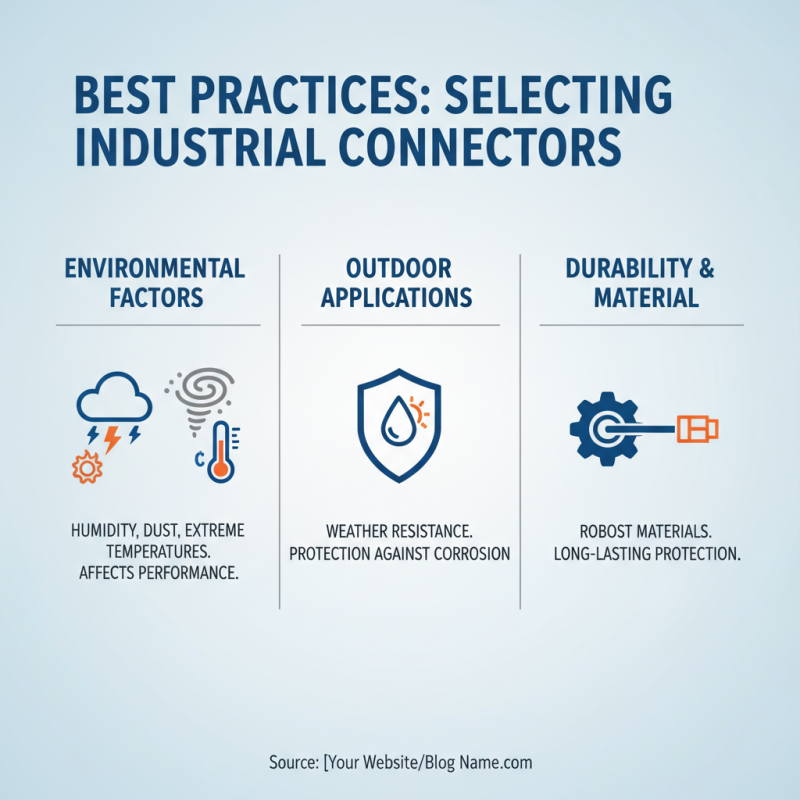
When selecting the right industrial connector, consider the environment. Humidity, dust, and extreme temperatures can affect performance. For instance, connectors in outdoor applications must resist weather elements. Look for materials that offer durability and protect against corrosion.
Another key factor is the electrical requirements. Understand the voltage and current ratings needed for your operation. It’s common to overlook these specifications, leading to potential failures. Pay close attention to these numbers to ensure safety and functionality.
Lastly, think about ease of installation. Complex connectors might complicate maintenance. Simpler designs can save time and headaches. However, don't sacrifice functionality for simplicity. Balancing these aspects is crucial for long-term performance. Reflect on your choices to avoid costly mistakes down the line.
Steps to Ensure Optimal Connection Integrity and Reliability
Ensuring optimal connection integrity is crucial for industrial connectors. A recent study shows that over 30% of equipment failures result from poor connections. This often leads to costly downtime and repair expenses. Proper maintenance and regular inspections can prevent many issues.
When installing connectors, consider environmental factors. Dust, moisture, and temperature fluctuations can impact performance. According to research, connections in harsh environments fail 50% more often than those in controlled settings. Regular cleaning and using appropriate protective measures can extend connector life.
Additionally, training personnel on best practices is vital. A significant percentage of manufacturers do not provide adequate training. This gap often leads to mishandling connectors, increasing failure rates. Investing in education can yield substantial long-term returns. Properly trained staff can significantly reduce operational risks.
Maintenance Tips for Prolonging the Life of Industrial Connectors
Industrial connectors play a crucial role in effective machinery operation. Maintaining them can prolong their life significantly. Regular inspections should be part of your routine. Look for signs of wear, dirt, or corrosion. These issues can lead to poor connections and equipment failures. A simple visual check can save you from costly downtime.
Cleaning is essential. Use dry cloths to wipe dirt off connectors. Avoid using liquids unless specified. If connectors get very dirty, a gentle scrub with a soft brush may help. Ensure connectors are completely dry before assembly. Moisture can cause short circuits, leading to failures.
Storing connectors properly is key. Keep them in a dry, cool place, away from dust. Using protective covers can shield them from damage during transport. Don't forget to check their alignment before making connections. Misalignment leads to stress and potential breakage. Small mistakes can lead to big problems later.

 Email
Email WeChat