What is a High Frequency Connector and its Applications?
High Frequency Connectors are pivotal in today’s fast-paced electronic landscape. They enable seamless communication in various applications, including telecommunications, military, and aerospace. These connectors help transmit signals at high frequencies, often exceeding 10 GHz. Their design minimizes signal loss and enhances performance.
Engineered for precision, High Frequency Connectors are used in radar systems, satellite communications, and wireless technology. They are essential for achieving high data rates and reliable connections in demanding environments. However, selecting the right connector can be challenging. Factors like impedance matching and connector size must be considered.
Despite their advantages, High Frequency Connectors can be costly. It's crucial to weigh performance against budget constraints. Moreover, the complexity of installation and maintenance should not be overlooked. This nuanced understanding can help professionals make informed decisions about their applications and requirements.
Definition of High Frequency Connectors
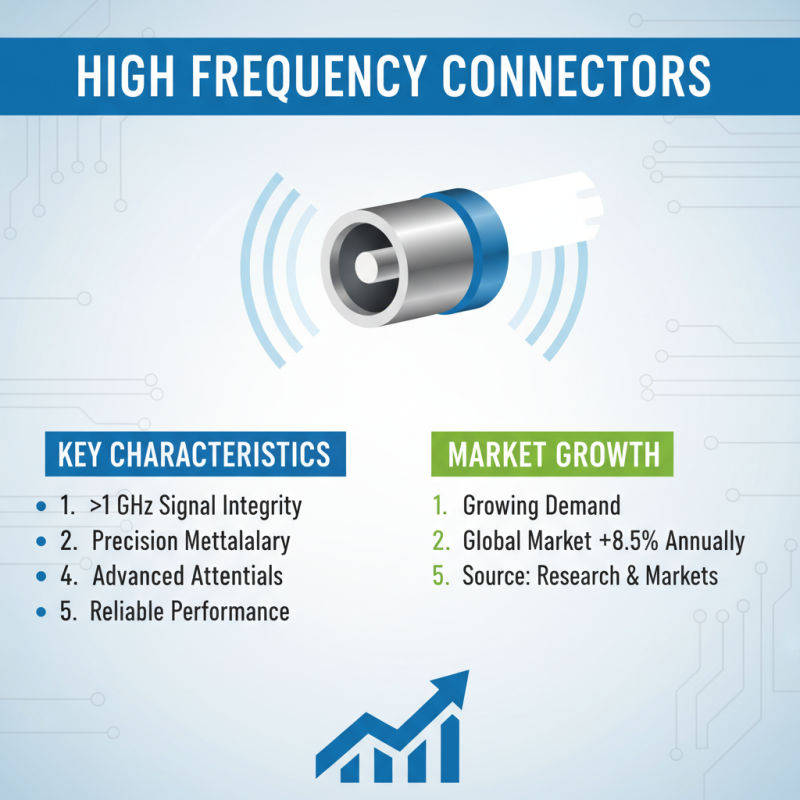
High frequency connectors are essential components in modern electronic systems. These connectors are designed to maintain signal integrity at high frequencies, typically exceeding 1 GHz. Their construction utilizes precision metallurgy and advanced materials. This minimizes attenuation and ensures reliable performance. The demand for these connectors is increasing. According to a report by Research and Markets, the global high frequency connector market is projected to grow by 8.5% annually.
Applications of high frequency connectors span various industries. They are critical in telecommunications, aerospace, and medical devices. In telecommunications, for instance, connectors facilitate seamless data transmission in cellular networks. In aerospace, reliable connections are vital for navigation and communication systems. The specific design of these connectors often involves solderless designs. This aids quick assembly while ensuring robustness against environmental factors.
Choosing the right high frequency connector can be challenging. It's important to consider factors like impedance, frequency range, and application environment. Misalignments or poor choices can significantly impact performance. Regular evaluations of connector performance also help identify vulnerabilities. Maintaining a systematic review process is crucial to overcoming issues related to degradation over time.
Key Characteristics of High Frequency Connectors
High-frequency connectors play a crucial role in modern communication systems. They are specifically designed to handle high frequencies, ensuring minimal signal loss and interference. This is vital for applications in telecommunications, aerospace, and radar systems. Their compact size allows for greater design flexibility, which is essential in space-constrained environments.
One key characteristic of high-frequency connectors is their impedance stability. They maintain consistent impedance across a broad frequency range. This stability reduces reflections in high-speed signals. Additionally, high-frequency connectors often feature precision machining, ensuring secure connections and reliability. Materials used, like high-grade plastics and metals, enhance durability against harsh conditions.
While high-frequency connectors provide many advantages, their complexity can lead to installation challenges. Proper alignment is critical to ensure optimal performance. Users must consider these factors when selecting and installing these components. Misalignment can cause significant signal degradation. Awareness of these potential pitfalls is necessary to achieve the best results in high-frequency applications.
Common Applications of High Frequency Connectors
High frequency connectors are critical components in modern communication systems. They ensure the reliable transfer of signals over high-frequency applications. Common uses include telecommunications, aerospace, and military equipment. According to a recent market report, the global high frequency connector market is projected to reach $3.2 billion by 2026, growing at a CAGR of 8.3%.
In telecommunications, these connectors facilitate the performance of 5G networks. They are essential for minimizing signal loss and maintaining data integrity. High frequency connectors are often found in microstrip circuits and RF applications, where precise fidelity is crucial. Aerospace applications also rely on these connectors for durability and reliability in extreme conditions. Reports indicate a significant increase in demand for these connectors in satellite communication systems, driven by the global push for enhanced connectivity.
However, challenges persist in the manufacturing and design processes. Ensuring consistent quality while meeting the specific needs of various applications can be difficult. Experts highlight that continuous innovation is necessary to maintain pace with evolving technology. The industry must address these obstacles to fully harness the potential of high frequency connectors in emerging fields like IoT and advanced radar systems.
Benefits of Using High Frequency Connectors
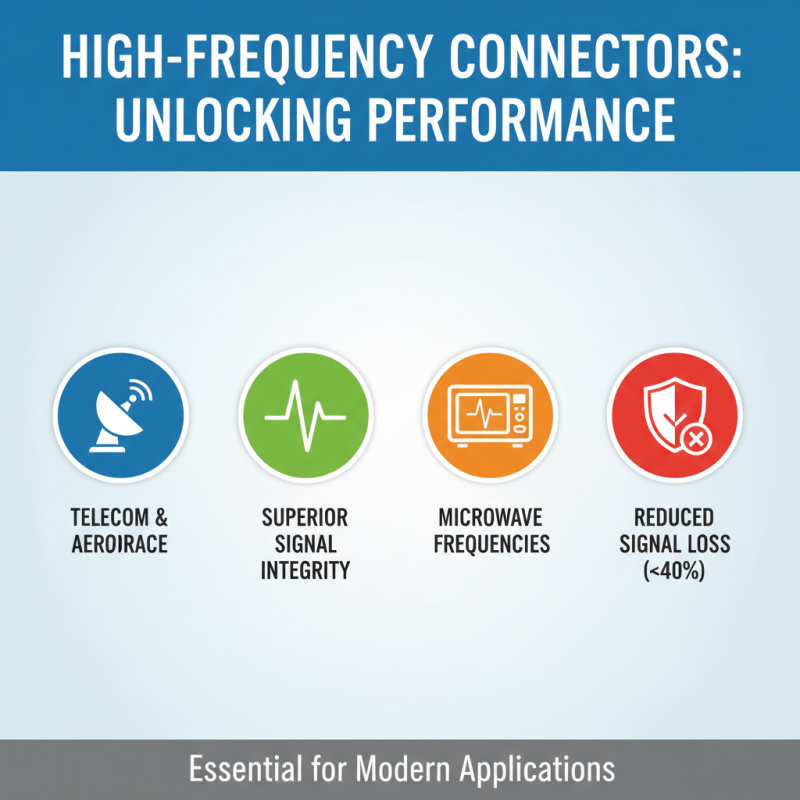
High-frequency connectors are vital in various industries, particularly in telecommunications and aerospace. Their primary advantage lies in signal integrity. These connectors can operate at microwave frequencies, maintaining performance across a broad range of applications. According to a recent industry report, over 40% of signal loss occurs due to inadequate connectors, emphasizing the need for high-quality options.
One key benefit of high-frequency connectors is their ability to reduce electromagnetic interference (EMI). This is crucial in dense electronic environments where multiple signals coexist. The use of these connectors can improve overall system reliability by at least 25%. Engineers often report that incorporating superior connectors can enhance data transmission rates, leading to better operational efficiencies.
However, not all high-frequency connectors are created equal. Design variations can lead to performance discrepancies. Some connectors may not ensure a robust connection in high-vibration settings, which can result in signal degradation. Regularly evaluating connector performance is essential, as poor choices can undermine the intended benefits. Adjustments in design and installation practices may be necessary to optimize their advantages.
Future Trends in High Frequency Connector Technology
The demand for high frequency connectors is rapidly increasing. These connectors are essential for advanced communication systems. Industries are pushing for faster data transfer and higher frequencies. This trend compels manufacturers to innovate continuously.
Future trends indicate a move towards miniaturization. As devices shrink, connectors must follow suit without sacrificing performance. New materials will enhance durability and signal integrity. We may see increased use of high-performance ceramics and composites. These materials can withstand harsh environments while maintaining reliability. The focus is also on improving thermal management.
Moreover, sustainability is becoming a key concern. There is a push for eco-friendly materials in connector production. Manufacturers are exploring recyclable options. This shift could reduce the environmental impact of production. However, achieving this balance remains a challenge. The need for high performance must be met alongside sustainability goals. Ongoing research is vital as we navigate these complexities.
What is a High Frequency Connector and its Applications? - Future Trends in High Frequency Connector Technology
| Application Area |
Connector Type |
Frequency Range (GHz) |
Key Features |
| Telecommunications |
SMA |
DC - 18 |
Compact size, reliable |
| Aerospace |
TNC |
DC - 11 |
Weather resistant, durable |
| Medical Devices |
BNC |
DC - 4 |
High reliability, easy to connect |
| Automotive |
N Type |
DC - 11 |
Robust, high-frequency performance |
| Internet of Things (IoT) |
MMCX |
DC - 6 |
Miniature size, lightweight |

 Email
Email WeChat