Ultimate Guide to 4 Pin Header Socket Tips for Optimal Performance
In the world of electronics, the 4 Pin Header Socket is a vital component. This small connector can make or break a project. Selecting the right socket affects performance and reliability.
Understanding its significance is essential for any engineer. A poorly chosen socket can lead to signal loss and connectivity issues. The 4 Pin Header Socket connects various devices, facilitating communication. Yet, many overlook its importance. They often choose based on cost rather than quality.
Choosing the right pin header is not just about the price. Details matter, such as pin spacing and material. Neglecting these can cause regret later. Learning how to optimize the 4 Pin Header Socket is crucial. It ensures longevity and efficiency in your designs.
Understanding 4 Pin Header Socket: Basics and Applications
The 4 pin header socket is essential in many electronic applications. This connector type is commonly used to interface various components, such as sensors and microcontrollers. Understanding its function is vital for building reliable circuits. Each pin serves a distinct purpose, often related to power and signal transmission.
Applications can range from simple projects to complex systems. In robotics, for instance, these sockets connect motors and sensors. However, not all connections are reliable. Sometimes, poor soldering or connection can lead to failures. It’s crucial to inspect connections regularly to ensure optimal performance.
Voltage and current ratings matter too. Exceeding these limits can cause overheating and failure. Users should consult technical specifications carefully when designing circuits. Mistakes can lead to frustrating debugging sessions. Reflection on past experiences can prevent future errors and enhance project outcomes.
Ultimate Guide to 4 Pin Header Socket Tips for Optimal Performance
| Feature |
Description |
Application |
Typical Voltage |
Pin Configuration |
| Power Supply |
Provides voltage to components |
Motherboards, power connectors |
5V, 12V |
1-2 power pins |
| Ground |
Common return path for electricity |
Electronics, connectors |
0V |
1 ground pin |
| Data Signal |
Transmits data between devices |
Sensors, modules |
Varies |
2-3 signal pins |
| Control Signal |
Used for device control |
Fan speed control, LED lighting |
Varies |
1-2 control pins |
Key Features of 4 Pin Header Sockets for Enhanced Performance
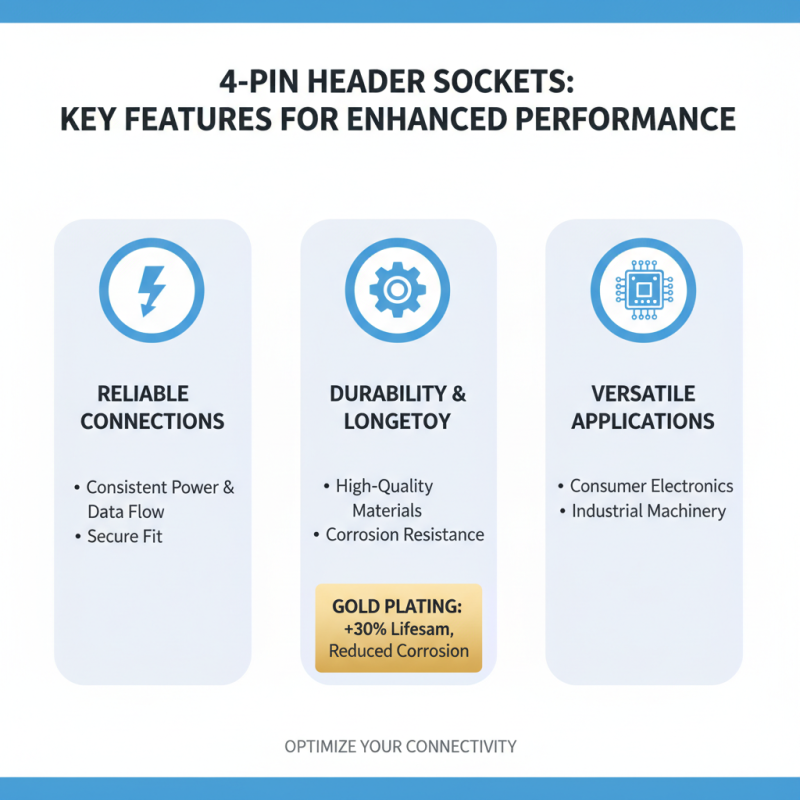
When it comes to 4 pin header sockets, understanding their key features can significantly enhance performance. Designed to provide reliable electrical connections, these sockets are widely used in various applications, from consumer electronics to industrial machinery. High-quality materials improve durability and conductivity. A recent industry report highlighted that connectors made from gold plating can reduce corrosion and increase life span by over 30%.
Pin spacing is crucial. Standard spacing of 2.54mm offers compatibility. However, not all devices utilize this standard. Improper integration can lead to device failures. Reports indicate that misalignment in headers can cause a failure rate increase of up to 15%. This highlights the importance of careful consideration during the design stage.
Additionally, the locking mechanism is vital for security. This feature prevents accidental disconnection. Some designs include a latch that enhances retention. Research has shown that sockets with enhanced retention mechanisms can cut disconnection rates by nearly 20%. While it may seem trivial, these small details can significantly contribute to overall system reliability.
Installation Tips for 4 Pin Header Sockets: A Step-by-Step Guide
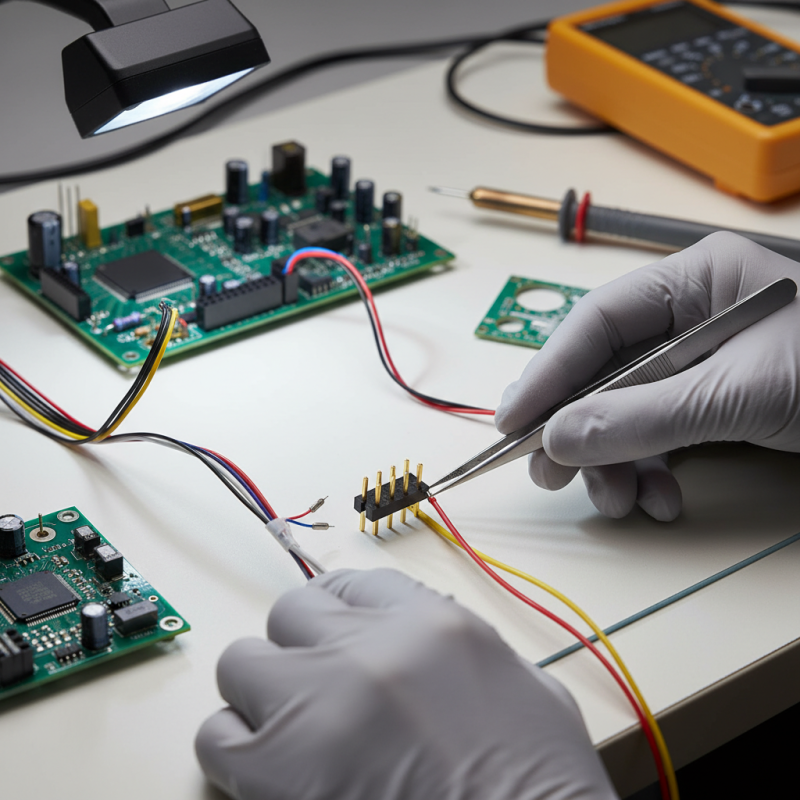
When installing a 4 pin header socket, it’s crucial to pay attention to the orientation. Incorrect orientation can lead to poor connections or damage. Align the socket with the motherboard carefully. Ensure the pin one indicator lines up properly. Sometimes, even slight misalignments can cause failures. So, triple-check before securing it down.
Tip: Use a magnifying glass to inspect the pins closely. This can help identify any bending or misalignment. If you see issues, gently straighten the pins. It’s a simple step but can save a lot of headaches later.
While soldering the socket, maintain a steady hand. Too much solder can create blobs that short connections. Conversely, too little can lead to weak joints, causing intermittent connections. Practice on scrap materials if you're unsure. It’s better to refine your skills before working on important components.
Tip: Keep a damp sponge nearby. This helps clean the soldering iron and prevents excessive buildup. A clean tool means better precision.
Best Practices for Maintaining 4 Pin Header Socket Connections
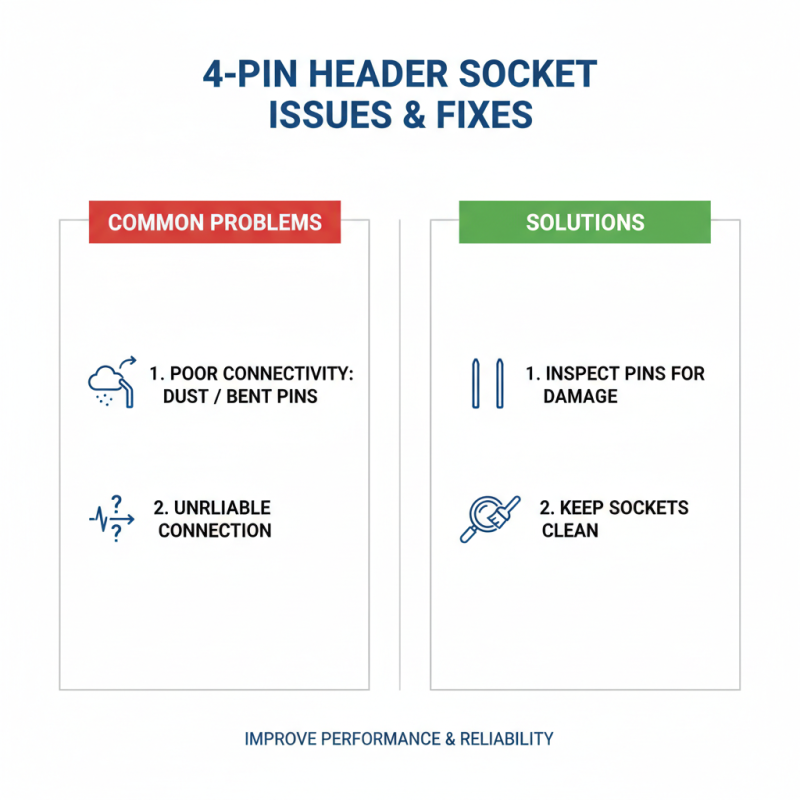
Maintaining 4 pin header socket connections is crucial for optimal performance. Regular inspections can help identify issues early. Look for signs of wear or corrosion on the pins. Over time, connections can weaken, leading to poor performance. Clean the headers occasionally with a soft brush. This helps to remove dust and debris that may impede the connection.
When connecting wires, ensure a snug fit without excessive force. Too much pressure can damage the pins. Instead, aim for a balance—secure, yet gentle. If a connection feels loose, it may be worth reseating the pins. Check for bent or broken pins that may compromise functionality. It’s easy to overlook these details, but they matter immensely.
Lastly, consider the environmental factors impacting your connections. Humidity and temperature fluctuations can affect performance. Take proactive measures, such as using protective covers when not in use. Despite your best efforts, connections may still fail. Reflect on the process and learn from any mishaps. Adjustments can lead to improved reliability in the long run.
Optimizing 4 Pin Header Socket Connections
This chart illustrates the performance scores across various metrics that influence the reliability and efficiency of 4 pin header socket connections. Key factors include connection quality, pin alignment accuracy, signal integrity, temperature performance, and mechanical durability.

 Email
Email WeChat