How to Choose the Right Plc Connector for Your System?
Choosing the right PLC connector for your system is essential for efficiency and reliability. According to a recent industry report by Market Research Future, the global market for PLC connectors is projected to grow by 8% annually. This rapid growth highlights the increasing importance of effective connectivity in automation systems.
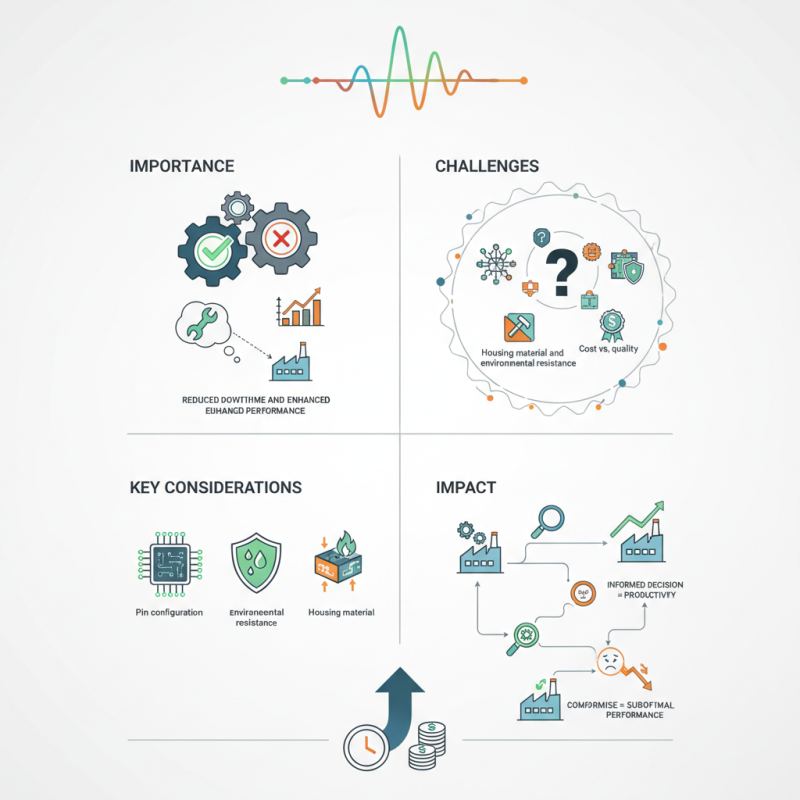
Expert in industrial connectivity, Dr. John Stevens, emphasizes, "Selecting the right PLC connector can reduce downtime and enhance system performance." This insight underscores the profound impact that proper connector choices can have on an organization’s operational effectiveness. Yet, many companies still overlook this vital aspect, often leading to suboptimal performance.
Understanding different PLC connectors can be overwhelming. Factors such as pin configuration, housing material, and environmental resistance must be considered. Many firms struggle to balance cost and quality in their choices, which may lead to regrettable compromises in functionality. An informed decision can significantly shape the productivity of your automation system, making it critical to invest the necessary time and resources into this process.
Understanding PLC Connectors: Types and Applications
PLC connectors play a crucial role in industrial automation. They ensure effective communication and power distribution among various components. Understanding the types of PLC connectors can guide users in selecting the right ones for their applications. Common types include DIN rail connectors, terminal block connectors, and modular connectors. Each type has its own advantages and drawbacks.
According to a 2022 market report, DIN rail connectors hold a significant market share. They are favored for their space-saving designs. Meanwhile, terminal block connectors are known for ease of installation. Yet, many users misunderstand their compatibility. Overlooking these details can lead to costly mistakes.
Another aspect is the application environment. For example, connectors in harsh conditions need better sealing. Some connectors may struggle with dust and moisture. Choosing connectors without considering their environment can compromise system reliability. Regular assessments of connector performance in real-life scenarios are essential for long-term success.
How to Choose the Right Plc Connector for Your System? - Understanding PLC Connectors: Types and Applications
| Connector Type |
Application |
Pin Count |
Cable Type |
Typical Use |
| M12 Connector |
Sensor and Actuator Connection |
3 to 12 pins |
Flexible or rigid cables |
Automation systems |
| RJ45 Connector |
Networking Applications |
8 pins |
Ethernet cables |
Industrial Ethernet |
| D-sub Connector |
General Purpose Connections |
9 to 37 pins |
Shielded cables |
Control panels |
| Terminal Block Connector |
Power Distribution |
Varies (up to 24+) |
Solid or stranded wires |
Industrial control systems |
| DIN Connector |
Audio/Video Devices |
5 pins |
Screened cables |
Telecommunication |
Key Factors Influencing PLC Connector Selection
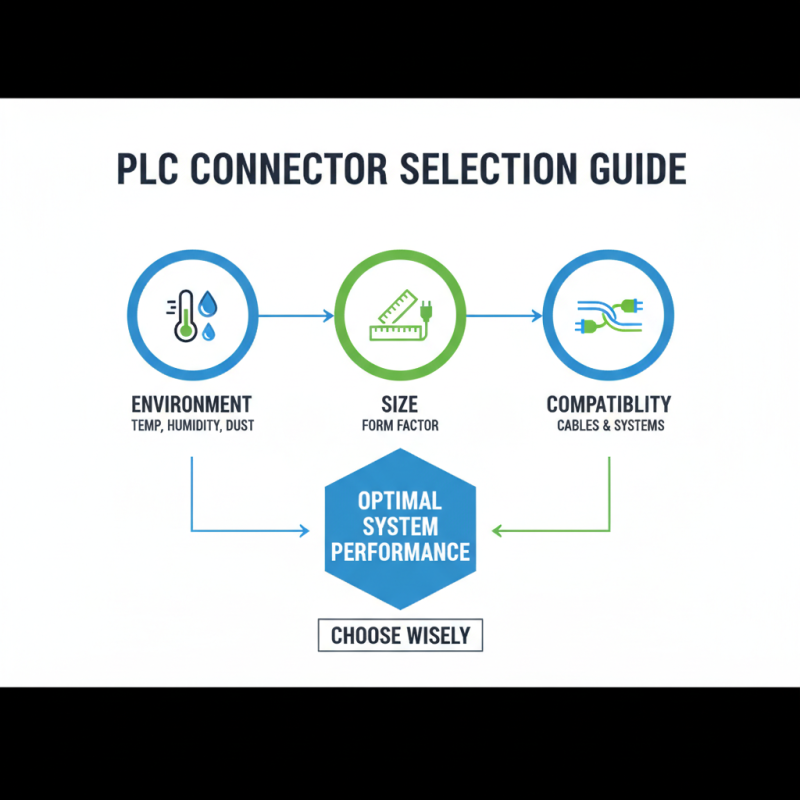
Choosing the right PLC connector can significantly impact your system's performance. Several key factors influence your selection process. These include the connector's environment, size, and compatibility with cables. Temperature, humidity, and exposure to dust are environmental aspects to consider.
A well-designed connector should withstand the demands of its location. For instance, if it is in a high-vibration area, select a robust connector. Size matters too; it must fit within your enclosure without crowding other components.
Tips: Ensure the connector can handle the required current load efficiently. Always verify the pin configuration. Test different options if you are uncertain. Take time to research; it can save future headaches. If a connector seems too complex, rethink your choice. Do not overlook regulatory standards for safety and performance in your region.
Evaluating Compatibility with PLC Systems: Protocols and Standards
When choosing a PLC connector, compatibility is crucial. Identify the protocols that your system uses. Common protocols include Modbus, Profibus, and Ethernet/IP. Each protocol has specific requirements. Misalignment can lead to communication failures. Check the specifications of your PLC system. This ensures a proper connection.
Standards are equally important. Different industries may follow unique standards. For example, automotive and manufacturing sectors have distinct needs. Understanding these can prevent costly mistakes. Sometimes, connectors look similar, but their functions differ. Use caution when selecting components.
Evaluate the environment where the PLC operates. Industrial settings often have harsh conditions. Dust, moisture, and temperature fluctuations can impact performance. Choose connectors designed for such scenarios. This is an area where many overlook details. Small oversights may lead to significant issues later. Be thorough in your assessment.
Analyzing Environmental Considerations When Choosing PLC Connectors
When choosing the right PLC connector, environmental factors play a crucial role.
Consider where the connector will be used. Will it face extreme temperatures or moisture? This can significantly impact performance.
For outdoor applications, connectors with higher IP ratings are essential.
Examine the humidity levels and potential contaminants in the environment. Dust and chemicals can degrade connections.
Material choices also matter. Plastic housings might not withstand harsh conditions as well as metals.
Corrosion resistance is vital for longevity. The lifespan of a connector may be shortened due to environmental wear and tear.
Reflect on past experiences; some connectors may have failed under specific conditions.
This could guide your future decisions. Don't overlook mounting options, as they can influence durability and accessibility.
Evaluating all these factors can feel overwhelming. It’s easy to focus only on specifications.
Yet, practical performance in real-world conditions is vital. Sometimes, prototypes can help reveal compatibility issues.
Testing under anticipated environmental conditions is a wise move.
Pay attention to feedback from users in similar environments. Their insights can save you from costly mistakes.
Cost Implications and Return on Investment for PLC Connector Selection
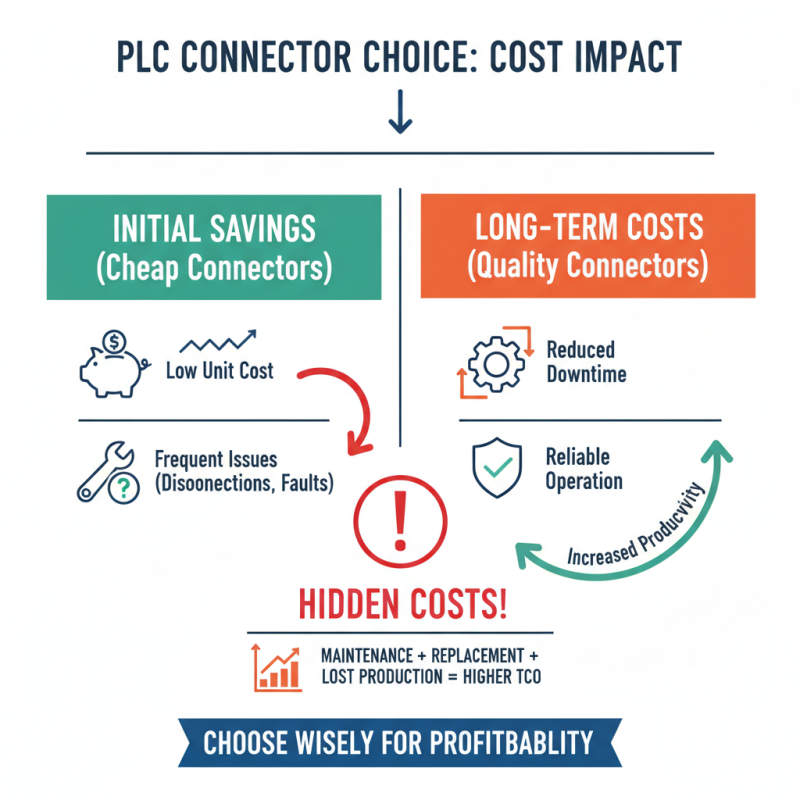
Choosing the right PLC connector can significantly impact project costs. Selecting connectors that fit your needs is crucial. Cheap connectors may seem appealing, but they often lead to maintenance issues. Over time, these problems can escalate costs, making them less economical. Think about the long-term implications of your initial choice.
Return on investment is essential when assessing connectors. A high-quality connector might have a higher upfront cost. However, it often provides greater reliability and durability. This can reduce downtime and improve system efficiency. Investing in robust connectors can save money in repairs and replacements later.
Don’t overlook the potential hidden costs. Poorly chosen connectors can affect system performance, leading to unexpected expenses. Reflect on each decision and its long-term effects. Carefully analyze specifications and try to balance cost with quality. It's a challenging but necessary process.

 Email
Email WeChat