How to Choose the Right Pin Header Socket for Your Project?
Choosing the right Pin Header Socket for your project can seem daunting. With so many options available, making the best choice is critical. Expert engineer John Smith once said, "The right connection can make or break your design." This highlights the importance of selecting the appropriate Pin Header Socket.
When considering your options, think about the specifications. The pitch, number of pins, and current rating are crucial. For instance, a 2.54 mm pitch may suit your needs better than a 1.27 mm pitch. It’s essential to match the socket with your board layout. However, many overlook this aspect, leading to connection issues.
Additionally, don’t forget about durability. Materials matter. A well-made Pin Header Socket can withstand wear and tear. Skimping on quality might save money now but could result in future headaches. Reflect on how you prioritize quality versus cost. Ultimately, the right choice can enhance longevity and performance in your project.
Understanding the Basics of Pin Header Sockets
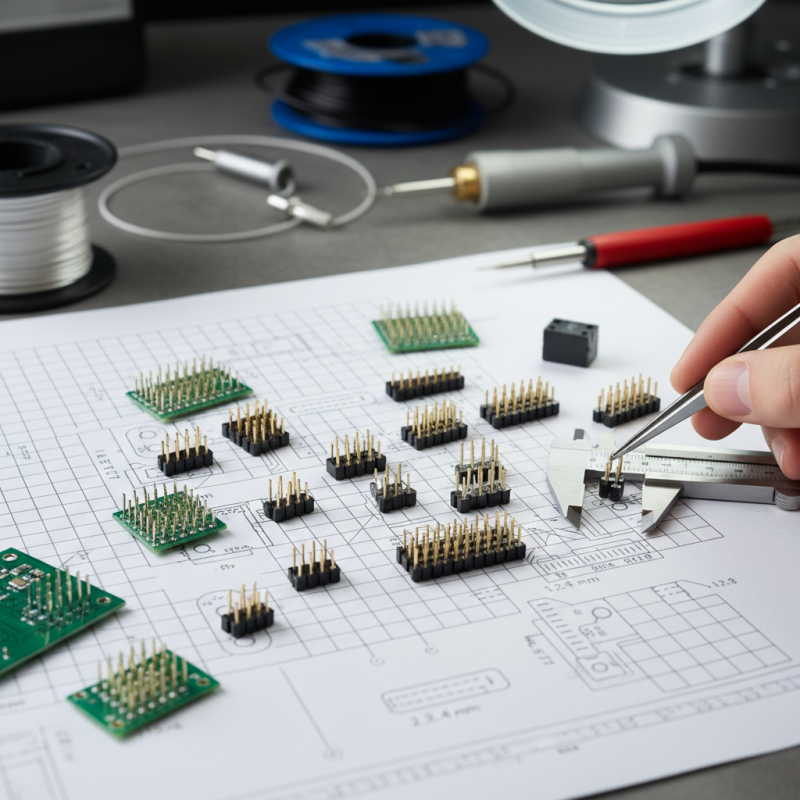
When selecting a pin header socket, understanding the basics is essential. A pin header socket connects various electronic components. It provides a means to connect printed circuit boards easily. The design of the socket can influence the flexibility of your project. Various shapes and mounting styles exist. Knowing your specific needs helps in making informed choices.
Consider the number of pins required. A socket can have anywhere from two to several rows of pins. This configuration will dictate how components connect to your board. Think about the pitch – the distance between pins. Standard pitches include 2.54 mm and 1.27 mm. Make sure to match the pitch to your components.
Reflect on the material and temperature rating. Sockets come in different materials, affecting durability and conductivity. Choose a socket that can withstand the environment in which it will be used. High temperatures can damage some materials. Test your chosen socket under real conditions to ensure it meets your project’s needs. Each decision impacts the overall reliability and performance of your design.
Identifying Your Project Requirements and Specifications
When selecting a pin header socket for your project, defining project requirements is critical. Consider the number of pins you need. Reports indicate that assemblies often have between 2 and 20 pins. However, some projects might require even more. This decision impacts the socket type and layout.
Next, assess the pin spacing and orientation. Standard pin spacing is typically 2.54 mm, but variations exist. A mismatch here could lead to compatibility issues. Additionally, think about the mechanical strength and durability requirements. For instance, if your project will undergo movement, you'll need robust materials. Industry studies show that over 30% of failures occur due to mechanical stress on connections.
Power ratings also matter. Depending on your application, you may require sockets that can handle significant current. It's essential to check not just ampacity but also voltage ratings. A mismatch can be detrimental. Many engineers overlook these details, leading to project delays and failures. Consider outdoor use conditions too. Environmental factors can impact your choice significantly, demanding extra attention to materials.
Evaluating Different Types of Pin Header Sockets Available
When selecting a pin header socket, consider the different types available. Pin header sockets come in various configurations. They can differ in pin count, pitch, and mounting style. A common pitch is 2.54mm, but other sizes might suit your project better. Larger or smaller pitches can lead to compatibility issues.
Evaluate your project’s space and connectivity requirements. You might opt for through-hole sockets for stronger connections. Alternatively, surface-mount types can save space on compact boards. This choice is crucial; the wrong type may hinder assembly. It’s essential to assess not only the immediate needs but also future modifications.
Another aspect to reflect on is pin material. Gold plating offers superior conductivity but increases cost. Nickel-plated options are more budget-friendly but can corrode over time. Consider environmental factors impacting your project. Making an informed decision involves balancing cost, performance, and durability. Taking the time to analyze these factors will lead to better project outcomes.
Comparison of Different Pin Header Socket Types
Factors to Consider When Selecting a Pin Header Socket
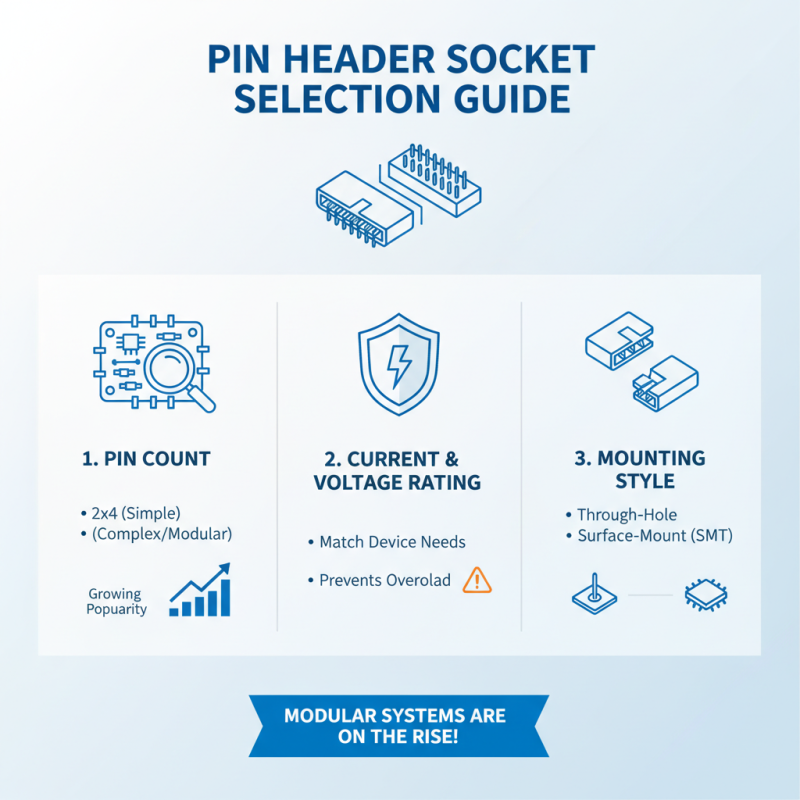
When selecting a pin header socket, several factors come into play. The pin count is crucial. Most projects require specific pin configurations. For instance, a 2x4 socket suits simple applications. Conversely, complex systems may need 2x20 configurations or more. According to industry reports, pin headers with higher pin counts are gaining popularity, especially in modular systems.
Consider the material. Metal contacts are common, but not all metals are equal. Brass offers a good balance of conductivity and durability. Aluminum, while lighter, does not perform as well. The insulator material matters too. High-temperature plastics are better for heat dissipation. A poor choice can lead to failure during operation. The recent market analysis highlighted performance issues with lower-grade plastics.
Tip: Always check the operating temperature range. A socket that can't handle heat may compromise the entire project.
Next, think about the mounting style. Through-hole sockets provide strong connections. Surface-mount versions are great for space-saving designs. Ensure compatibility with your PCB layout. Many manufacturers provide detailed specifications online, but not all data is reliable.
Tip: Prototyping can reveal unforeseen issues. Don’t skip this step! Testing helps in identifying problems before production.
Best Practices for Installing and Using Pin Header Sockets
When installing pin header sockets, precision matters. The alignment and spacing must be exact. Misalignment can lead to connection issues. This can result in device failures, which are costly. According to recent industry reports, about 30% of electronic device failures trace back to poor soldering or installation errors. Ensuring proper alignment during installation is crucial.
Use the right tools for the job. A small, precision soldering iron is essential. This minimizes the risk of overheating and damaging the components. Employ a multimeter after installation to check for solid connections. This step is often overlooked. Yet, one in five installations suffers from overlooked testing, leading to unexpected malfunctions.
Consider the material and design of the pin header sockets. Different projects may require specific configurations. For example, gold-plated pins resist corrosion better and enhance conductivity. However, they are often more expensive. Balancing cost with functionality is a tricky task. It’s essential to assess project needs carefully. This thought process helps in making the right choice and avoiding future headaches.
How to Choose the Right Pin Header Socket for Your Project? - Best Practices for Installing and Using Pin Header Sockets
| Dimension |
Value |
Comment |
| Pin Count |
2 to 40 |
Choose based on the number of connections needed. |
| Pitch |
2.54mm, 2.00mm |
Common pitches; 2.54mm is standard for most headers. |
| Mounting Type |
Through-hole, Surface-mount |
Choose based on your board design and assembly process. |
| Current Rating |
1A, 2A |
Ensure it matches your application's requirements. |
| Material |
Brass, Nickel-plated |
Affects conductivity and durability. |
| Operating Temperature |
-40°C to +100°C |
Ensure it fits your project's environmental conditions. |

 Email
Email WeChat