How to Choose the Right 2mm Pin Header Socket for Your Project?
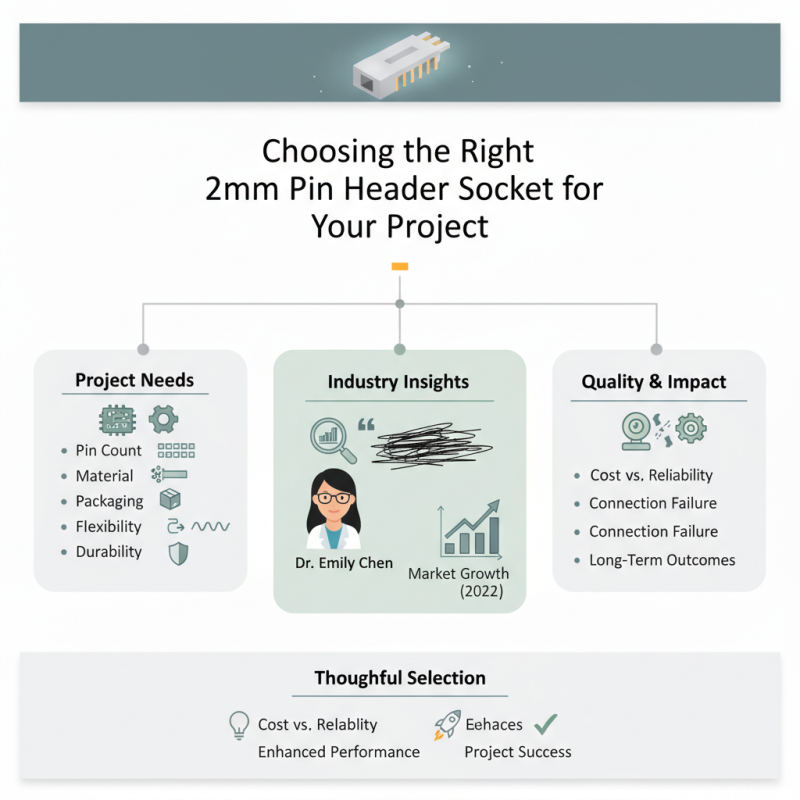
Selecting the right 2mm Pin Header Socket for your project is crucial. This socket type is widely used in electronics. According to industry expert Dr. Emily Chen, "Choosing the right connection can enhance project reliability and performance." In 2022, the market for pin header sockets grew by 15%. This growth indicates their increasing importance in modern electronics.
Understanding your project’s needs is essential. Different applications may require specific features in a 2mm Pin Header Socket. These features include pin count, material, and even packaging. Some projects may need flexibility, while others prioritize durability. Despite the availability of options, many engineers can overlook these critical factors.
Quality control is another area needing attention. A socket might seem cost-effective but could lead to failures. Frustratingly, some projects fail due to poor connections. Future projects must reflect on previous choices and their impact. A thoughtful selection can lead to better outcomes. Each decision matters in design and functionality.
Understanding the Basics of 2mm Pin Header Sockets
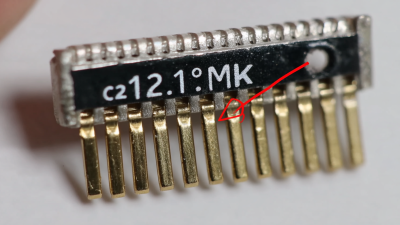
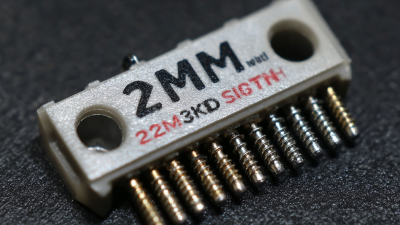
When choosing a 2mm pin header socket, it’s essential to grasp the basics. These sockets serve as connectors on circuit boards. They allow for easy attachment of wires or other components. Made from high-quality materials, they can support various applications. It's crucial to consider their pin count. More pins mean more connections. Fewer pins may limit functionality, so analyze your project needs.
Another factor is the orientation. Pin headers can be straight or angled. Straight pins fit on vertical boards, while angled ones are ideal for tight spaces. Review your design to choose properly. Compatibility with your components is another essential aspect. Ensure the pin spacing aligns with other parts. Misalignment can lead to significant issues during assembly.
Lastly, consider the environment where the socket will be used. Certain materials withstand heat better. Others resist corrosion. If planning to use the socket in extreme conditions, choose with care. Sometimes, people overlook these details. They later regret not checking suitability. A small oversight can lead to project delays or failures. Be mindful while selecting your 2mm pin header socket.
Identifying Project Requirements for Pin Header Selection
When selecting the right 2mm pin header socket, understanding project requirements is crucial. Consider the application's electrical ratings. According to a recent industry report, 70% of design failures stem from incorrect pin selections. Voltage and current ratings should align with your device's specifications. For instance, a socket rated for 3A may not suit a project demanding higher power.
Durability is another key factor. Many applications require sockets that endure environmental stressors. Typical options include sockets made of high-temperature thermoplastics. Research indicates that connectors with better moisture resistance can enhance longevity by up to 30%. Assess your project's exposure to conditions like humidity or vibration.
Pin count is also essential. Projects may need various configurations. Flexibility in pin counts allows for future adjustments or expansions. Inadequate pin counts can lead to functionality issues, impacting overall performance. A mismatch between socket and application will yield a frustrating outcome. Always evaluate how pin header selections match your design's evolving requirements.
Evaluating Material and Durability of Pin Header Sockets
When selecting a 2mm pin header socket, material and durability play crucial roles. The most common materials used in sockets are thermoplastic and thermoset plastics. Thermoplastic offers flexibility and ease of molding. Meanwhile, thermoset provides superior heat resistance. Studies show that sockets made from high-temperature materials can withstand over 260°C during soldering. However, not all thermoplastics are created equal, and some may degrade faster, especially under constant thermal stress.
Tips: Always check the thermal properties of the material. Look for specifications that list the glass transition temperature (Tg). A higher Tg generally indicates better durability.
Corrosion resistance is another key factor. Many pin headers use a metal plating like gold or nickel. Gold-plated contacts resist oxidation but come at a higher cost. Nickel is more affordable but vulnerable to corrosion over time. An industry report indicates that corrosion can reduce socket lifespan by up to 30%.
Tips: Consider the environment where the socket will be used. If humidity is high, opt for gold plating. Look for certifications like RoHS to ensure quality.
Choosing the right materials may seem straightforward. Yet, it demands careful thought. Evaluate how these factors impact your project's longevity and reliability. Testing different sockets under real project conditions can reveal imperfections in material choices that are not immediately obvious.
Evaluation of Material and Durability of 2mm Pin Header Sockets
Compatibility with Circuit Board and Connector Types
When selecting a 2mm pin header socket, compatibility is key. Check the specifications of your circuit board. Ensure the positioning of the holes matches the socket pins. Not all sockets fit all boards. The layout can vary, and this variation might cause assembly issues.
Connector types also play a significant role. Some headers are designed for specific connectors. If you use a non-matching connector, you may face poor connections. This can lead to signal loss or even failure to function. Test the connectors together before finalizing your choice.
Consider the gender of the connectors too. Pin headers come in male and female variations. Ensure you choose the appropriate type for your project. An incorrect gender can lead to confusion and errors during assembly. Always double-check the datasheets for detailed compatibility information. This step is often overlooked but critical for a smooth assembly process.
Determining Quantity and Cost Constraints for Your Project
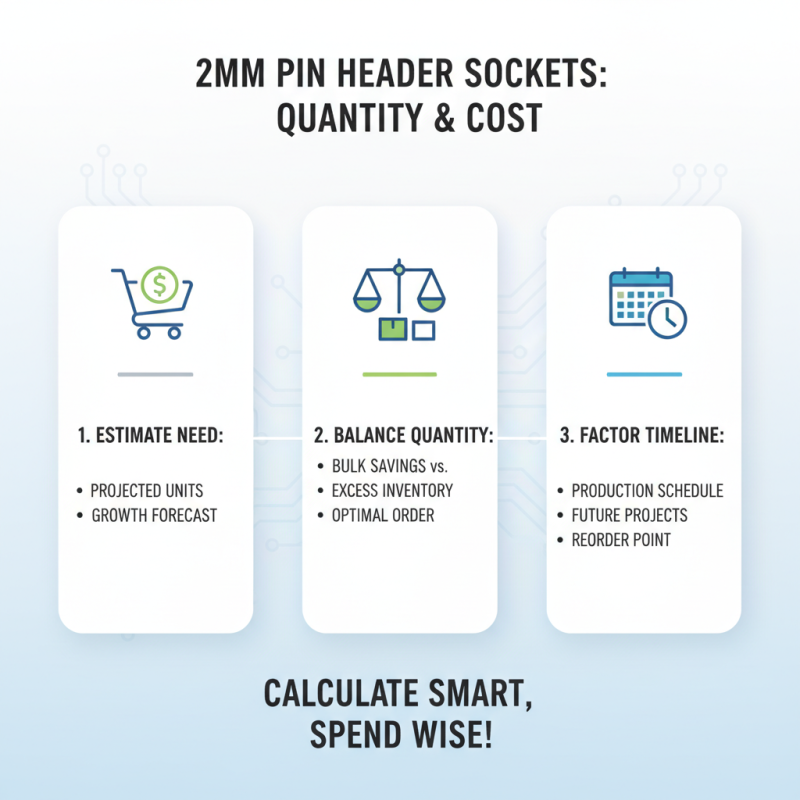
When starting a project that requires a 2mm pin header socket, consider your quantity and cost constraints carefully. Estimating how many sockets you need is crucial. It can be tempting to order a large quantity to save on costs, but this could lead to excess inventory. Think about your project timeline and future needs. Calculating a balanced quantity is essential.
Tips: Always evaluate your budget before purchasing. Set a limit that won’t strain your finances. Seek multiple suppliers for quotes. Sometimes, a small seller might have lower prices for smaller quantities.
Also, don’t overlook shipping costs and delivery times. A cheaper socket may end up being more expensive when you factor in these aspects. If a supplier cannot deliver on time, it's a significant risk.
Remember, compromises may be necessary. Weigh the quality against the price. A socket that is less expensive might not perform well. Always look for connectors that meet your requirements, even if it's a little pricier.

 Email
Email WeChat