Leave Your Message

2026 Best Industrial Connector Suppliers Worldwide?

Choosing the 2026 best Industrial Connector suppliers requires more than comparing product catalogs. Real performance appears inside factories, control cabinets, rail systems, and outdoor equipment. A connector may look excellent on paper, yet fail after repeated vibration, humidity, dust, or thermal cycling.

This guide examines suppliers through practical evidence. We consider contact stability, mating cycles, current capacity, sealing performance, material quality, certifications, customization, delivery reliability, and technical support. We also review how manufacturers respond when specifications change. That matters. A fast engineering answer can prevent weeks of production delays.

Dennis Zogbi, a recognized connector-industry analyst at Bishop & Associates, has emphasized a practical principle: connector selection must match the application, not merely the catalog. That view shapes this comparison. The strongest supplier is not always the largest company. It may be the one that provides a secure locking system, clear drawings, consistent plating, and dependable samples.

Details matter.

This ranking should not be treated as permanent. Regional availability, factory capacity, pricing, and product launches can change during 2026. Some suppliers publish impressive technical figures, but independent testing may reveal a different picture. That is worth questioning.

Our assessment therefore balances published specifications with application experience, engineering transparency, and supply-chain resilience. It covers global manufacturers serving automation, energy, transportation, robotics, telecommunications, and heavy equipment. Buyers should still verify current certifications and conduct project-specific testing before approval. No universal winner exists. The right Industrial Connector supplier is the one that remains reliable under the exact conditions your equipment must survive.

2026 Best Industrial Connector Suppliers Worldwide?

What Defines a Leading Industrial Connector Supplier in 2026

A leading industrial connector supplier in 2026 must prove performance beyond a polished catalogue. MarketsandMarkets projects the industrial connectors market to grow at roughly 9% annually through 2028. That growth raises expectations for reliable supply, not just higher sales. Engineers need connectors that survive vibration, moisture, heat, and repeated maintenance cycles. Clear ratings matter. So do independent test records.

The supplier should provide traceability from raw material to finished assembly. Each batch needs documented contact resistance, insulation resistance, mating cycles, and ingress protection results. IEC 60529 ratings help verify protection against dust and water. However, an IP rating alone cannot predict every factory condition. Cable routing, chemical exposure, and installation errors still matter. This is where practical engineering support becomes valuable. Fast answers are not enough. Answers must be technically defensible.

Energy transition projects add another test. The International Energy Agency reported that global renewable capacity additions reached nearly 510 gigawatts in 2023. Solar, storage, and grid equipment require dependable power and signal connections in crowded enclosures. A capable supplier should support lifecycle planning, replacement compatibility, and regional compliance documentation. Cybersecurity may also affect intelligent connector systems. This area remains less mature than mechanical testing. That weakness deserves honest discussion, not marketing language. The best supplier may still make mistakes, but it measures them, explains them, and corrects the process.

2026 Best Industrial Connector Suppliers Worldwide?

What Defines a Leading Industrial Connector Supplier in 2026

Leading industrial connector suppliers are typically evaluated by measurable factors such as environmental protection, temperature resistance, electrical capacity, durability, regulatory compliance, and customization capability. The benchmark index below is based on common industrial connector specifications and procurement priorities, including IEC 60529 ingress-protection ratings, IEC 60068 environmental testing, UL 94 material performance, and RoHS/REACH compliance.

Key Industrial Connector Types and Their Applications

2026 Best Industrial Connector Suppliers Worldwide?

Key Industrial Connector Types and Their Applications

Industrial connectors link power, control signals, data, and equipment in demanding work environments. Their selection depends on current, voltage, vibration, moisture, temperature, and maintenance access. A connector may look small, yet its failure can stop an entire production line.

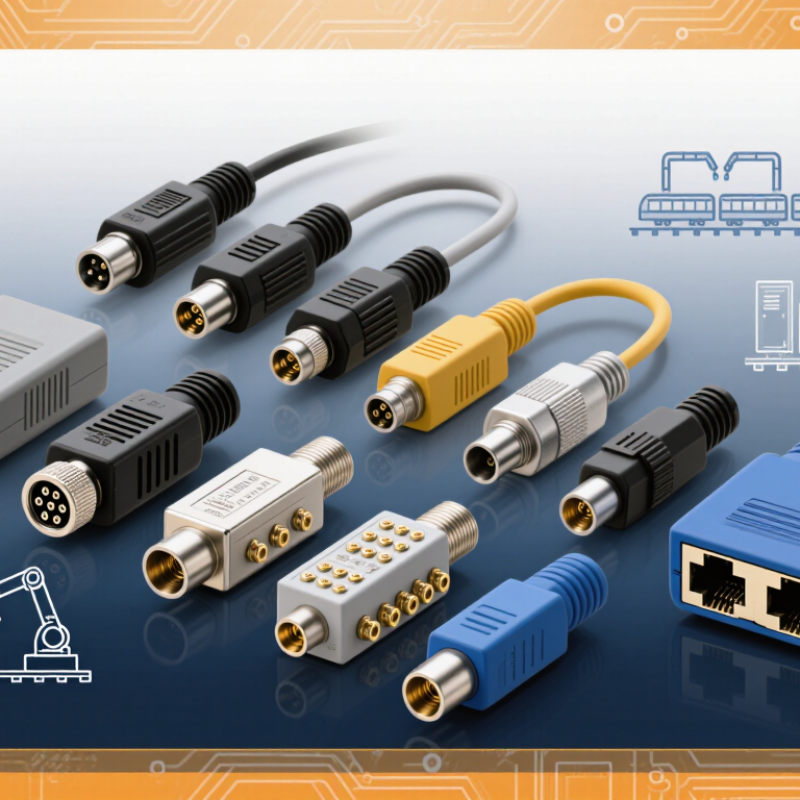
Circular connectors suit sensors, servo motors, automation equipment, and mobile machinery. They usually provide strong sealing and reliable performance under vibration. Rectangular heavy-duty connectors handle multiple power and control circuits. They are common in factory machines, rail systems, and energy equipment. Terminal blocks simplify cabinet wiring and allow quick inspection. Push-pull connectors support frequent servicing, especially in test instruments and robotics.

Data applications need more careful choices. Shielded connectors reduce electromagnetic interference around inverters and motors. Industrial Ethernet connectors support machine communication, while fiber connections work well near strong electrical noise. In food-processing areas, smooth housings and suitable ingress protection help reduce contamination risks. Outdoor equipment may require UV resistance, corrosion protection, and wide temperature ratings.

I have seen projects focus heavily on connector price and overlook mating cycles. That decision often creates hidden maintenance costs. A perfect connector does not exist. Engineers should verify the complete assembly, including cable diameter, contact plating, grounding, and installation space. Ratings on paper can still disappoint when technicians pull cables sharply or leave seals unfinished. Practical trials, inspection records, and clear replacement procedures make the final choice more dependable.

2026 Best Industrial Connector Suppliers Worldwide? - Key Industrial Connector Types and Their Applications

A supplier-neutral reference table for comparing industrial connector technologies, application environments, and selection criteria.

Industrial Connector Type Typical Configuration Primary Applications Common Standards or Interfaces Key Technical Advantages Typical Protection or Performance Considerations Best-Fit Industries
Circular Industrial Connectors Threaded, bayonet, push-pull, or snap-lock circular shells; power, signal, or mixed-contact versions. Machine controls, sensors, motors, robotics, factory automation, and mobile equipment. IEC 61076 series; connector-specific M-series and circular interface specifications. Compact form factor, reliable mating, strong mechanical retention, and flexible contact layouts. Ingress protection depends on the shell and cable assembly; verify current, voltage, shielding, and mating-cycle ratings. Industrial automation, robotics, transportation, energy, and process equipment.
M8 Sensor Connectors 8 mm threaded circular connectors, commonly with 3 or 4 contacts; straight and right-angle cable versions. Compact proximity sensors, photoelectric sensors, measurement devices, and small actuators. IEC 61076-2-104; commonly used for sensor and actuator connections. Small diameter, space-efficient installation, quick field replacement, and standardized sensor connectivity. Often available with IP67 or higher protection when correctly mated; confirm coding, contact assignment, and cable flexibility. Factory automation, packaging machinery, semiconductor equipment, and laboratory automation.
M12 Sensor and Data Connectors 12 mm threaded circular connectors with A-, B-, D-, or X-coded variants for power, signal, fieldbus, and Ethernet. Sensors, actuators, industrial Ethernet, fieldbus networks, vision systems, and control cabinets. IEC 61076-2-101; Ethernet versions commonly use D-coding or X-coding. Broad ecosystem, secure vibration-resistant coupling, compact installation, and support for power and data. IP67 is common in properly mated assemblies; X-coded versions support high-speed Ethernet, subject to the complete cable system. Automation, automotive production, material handling, robotics, and process control.
M23 Motor and Feedback Connectors Large circular connectors for motor power, resolver feedback, encoder signals, or hybrid power-and-signal connections. Servo motors, motion-control systems, CNC machinery, robotic arms, and automated production lines. IEC 61076-2-106 and related manufacturer-specific interface arrangements. High contact density, robust locking, effective shielding options, and suitability for continuous machine movement. Check conductor cross-section, voltage, current, EMC shielding, torsion performance, and cable-flex requirements. Motion control, robotics, machine tools, packaging, and industrial automation.
Heavy-Duty Rectangular Connectors Hoods, housings, inserts, and cable glands in modular rectangular assemblies; power, signal, and pneumatic modules may be combined. Motor connections, control cabinets, machine interfaces, rail equipment, and detachable industrial wiring. IEC 61984; protection classifications are commonly evaluated using IEC 60529. High mechanical strength, modularity, serviceability, and efficient handling of complex machine interfaces. Protection depends on hood, housing, seal, and cable-gland selection; verify locking, corrosion resistance, and current capacity. Manufacturing machinery, rail transportation, renewable energy, construction equipment, and logistics systems.
Terminal Blocks and Pluggable Terminal Blocks Screw, spring-clamp, push-in, or pluggable wire-to-board and wire-to-wire terminals. Control panels, power distribution, PLC wiring, instrumentation, and building or machine control systems. IEC 60947-7-1; PCB terminal blocks may also be assessed under relevant IEC terminal and equipment standards. Clear wiring organization, easy testing, field serviceability, and broad conductor-size options. Confirm rated voltage, rated current, pitch, wire range, temperature rise, creepage, clearance, and torque requirements. Industrial control, energy management, HVAC, process instrumentation, and panel building.
D-Subminiature Connectors Shielded metal or polymer shells with commonly used 9-, 15-, 25-, or 37-position layouts. Serial communication, legacy control interfaces, motion equipment, test instruments, and industrial computers. IEC 60807 series; RS-232, RS-485, and other electrical interfaces may use D-sub hardware. Well-established interface, low cost, wide availability, and straightforward panel mounting. Standard versions are not automatically sealed; use backshells, strain relief, and environmental housings where required. Industrial computing, test and measurement, automation, medical equipment, and instrumentation.
RJ45 Industrial Ethernet Connectors Shielded modular jacks, field-installable plugs, panel connectors, or ruggedized RJ45 assemblies. Industrial Ethernet, PLC networks, switches, machine communication, supervisory control, and edge devices. IEC 60603-7; Ethernet cabling performance is commonly specified using ISO/IEC 11801 and related cabling standards. Familiar interface, high data availability, broad equipment compatibility, and support for structured cabling. Industrial versions require attention to shielding, vibration retention, cable category, bend radius, and ingress protection. Factory automation, data acquisition, industrial IT, process control, and warehouse automation.
Industrial Fiber-Optic Connectors LC, SC, ST, MPO/MTP-compatible, or ruggedized fiber interfaces for single-mode or multimode links. Long-distance communication, high-EMI areas, substations, backbone networks, and high-bandwidth industrial systems. IEC 61754 interface families; IEC 61755 addresses optical interface performance parameters. Electrical isolation, immunity to electromagnetic interference, low signal loss over distance, and high bandwidth. Cleanliness, connector-endface inspection, bend radius, insertion loss, return loss, and mechanical protection are critical. Utilities, transportation, process industries, data infrastructure, and harsh industrial environments.
Board-to-Board Connectors Mezzanine, backplane, card-edge, or stacking connectors with vertical or right-angle mating. PLC modules, industrial computers, embedded controllers, measurement devices, and modular control electronics. IEC 61076 and product-specific connector specifications; signal integrity may be evaluated against high-speed design requirements. Compact internal interconnection, high contact density, modular product design, and reduced cabling. Evaluate mating alignment, contact normal force, vibration, thermal cycling, signal integrity, and service access. Industrial electronics, automation controls, instrumentation, networking, and embedded systems.
Wire-to-Board Connectors Crimp, insulation-displacement, spring, or locking housings connecting discrete wires to PCBs. Control modules, sensors, power supplies, displays, drives, and internal machine wiring. IEC 61984 and applicable component safety requirements; exact ratings depend on the connector family. Flexible PCB integration, compact packaging, keyed housings, and scalable contact configurations. Confirm wire gauge, crimp quality, retention force, polarization, temperature rating, and vibration performance. Industrial electronics, automation, HVAC controls, instrumentation, and power conversion.
Battery and High-Current Connectors Polarized two-pole or multi-pole power connectors with touch-safe housings and high-current contacts. Battery systems, AGVs, forklifts, energy storage, DC power distribution, and mobile machinery. IEC 61984 and applicable battery, machinery, or energy-storage safety requirements. Low contact resistance, clear polarity, high current capability, and rapid equipment service connection. Assess continuous versus peak current, mating under load, temperature rise, touch safety, arc control, and short-circuit protection. Material handling, electric mobility, renewable energy, warehousing, and industrial power systems.
Coaxial and RF Connectors BNC, TNC, SMA, N-type, or other coaxial interfaces with threaded, bayonet, or snap coupling. Industrial wireless systems, antennas, test equipment, radar, radio communication, and high-frequency instrumentation. IEC 61169 series; specific interface requirements vary by connector type and frequency range. Controlled impedance, shielding effectiveness, repeatable RF performance, and compact signal transmission. Verify operating frequency, return loss, insertion loss, VSWR, cable type, sealing, and environmental durability. Telecommunications, utilities, industrial wireless, defense-related systems, and test laboratories.

Selection note: Actual ratings vary by connector family, contact material, cable assembly, mating condition, and installation method. Always verify the applicable technical datasheet, IEC requirements, environmental rating, derating curve, and complete system certification before purchase or deployment.

Global Standards, Certifications, and Quality Requirements

For 2026, industrial connector buyers should evaluate standards before comparing prices. IEC 61984 defines safety requirements for connectors, while IEC 60512 specifies electrical and mechanical test methods. These tests cover contact resistance, insulation, vibration, temperature cycling, and durability. A reliable supplier should provide traceable reports, calibrated equipment records, and clear acceptance limits. Paper is not performance. ISO’s Survey 2023 recorded 1,265,216 valid ISO 9001 certificates worldwide, showing the scale of quality management adoption. However, certification alone does not prove stable connector performance.

Quality requirements should match the application. Automotive programs may require IATF 16949 controls, while industrial equipment often needs documented process capability and change management. For harsh environments, request ingress protection evidence, salt-spray results, and material declarations supporting RoHS and REACH compliance. MarketsandMarkets’ 2024 connector market analysis identifies automation, transportation, and energy systems as major growth areas. These sectors demand higher mating cycles and stronger vibration resistance. A perfect supplier file is unrealistic. Missing calibration evidence, however, deserves immediate attention.

Tips: Ask for reports linked to exact part numbers. Check revision dates and laboratory accreditation. Review lot traceability from raw material to shipment. Test samples from normal production, not only engineering batches. Compare contact resistance after repeated mating. Require written notification before design or material changes. Use independent verification for safety-critical applications. Small inconsistencies often reveal weak process control.

How to Evaluate Industrial Connector Suppliers Worldwide

Evaluating industrial connector suppliers should start with application evidence, not catalog size. Grand View Research valued the global electrical connectors market at about USD 84.2 billion in 2023. It forecasts roughly 6.5% annual growth through 2030. This expansion increases supplier choices, but it also increases comparison risk. Ask for test reports covering vibration, temperature cycling, salt spray, insertion force, and mating durability. A polished datasheet is not proof.

Deloitte’s 2024 Global Smart Manufacturing Survey found that 86% of manufacturing leaders view smart manufacturing as a major competitiveness driver. That shift makes signal stability and traceability more important. Check whether each connector has batch records, material declarations, inspection procedures, and change-notification controls. Verify IP ratings against IEC 60529 conditions, not only marketing language. Confirm compliance documents for every destination market. Small gaps can delay an entire production line.

Cost deserves a wider lens. Compare unit price, tooling, minimum order quantity, lead time, replacement stock, and field-failure exposure. Request samples from normal production, not specially selected pieces. I have seen evaluations overvalue a low price and undervalue delivery consistency. That is an imperfect method. Still, supplier audits remain useful. Review factory capacity, backup processes, quality staffing, and corrective-action records. Require realistic failure data, even when the answer is uncomfortable. A supplier that explains limitations clearly may be more dependable than one promising everything.

Major Supplier Regions and Emerging Market Trends

In 2026, supplier strength will depend on regional depth, not catalog size alone. The 2024 World Robotics report recorded 541,302 industrial robot installations worldwide in 2023. Asia represented about 70% of those installations. This concentration supports dense connector sourcing near automated factories. It also exposes buyers to shipping delays and regional disruptions.

East Asia remains a major production center. China offers broad manufacturing capacity and strong electronics supply chains. Japan and South Korea provide mature precision manufacturing and strict process control. Europe remains important for engineered systems, rail equipment, energy projects, and harsh industrial environments.

North America continues to support automation, aerospace, and localized production. Grand View Research valued the global industrial automation market at approximately 211.3 billion dollars in 2023, with continued growth expected through 2030.

Emerging markets are gaining practical importance. India is expanding electronics and factory automation investment, while Vietnam attracts production relocation. Mexico benefits from nearshoring and shorter delivery routes into North America. Eastern Europe also offers skilled labor and access to regional industrial networks. The best suppliers should show test records, vibration resistance, temperature ratings, and traceable materials. Local inventory matters too. A perfect forecast is impossible. I would still question any supplier relying only on low prices, because field failures often begin with small sealing or plating defects.