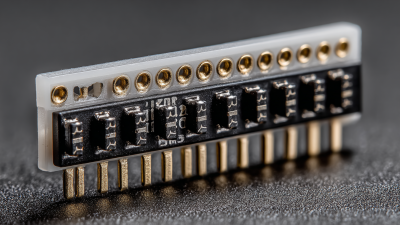
2026 Best Pin Header Socket Options for Your Projects?
In the world of electronics, Pin Header Sockets are crucial components. They provide reliable connections between various circuit elements. According to a recent report by MarketsandMarkets, the global market for these components is expected to grow significantly, reaching over $2 billion by 2026.
Choosing the best Pin Header Socket for your project can be challenging. Many options exist, each designed for specific applications. A survey by Electronic Design highlights that 65% of engineers value versatility in connectors. It reflects the increasing diversity in modern projects. However, not every socket will meet your needs. Quality and compatibility are essential factors to consider.
While many options are available, not all perform equally well. Some may fail under stress or heat. The right choice can make a difference. In an industry where performance is critical, understanding the features of Pin Header Sockets matters. Invest time in research. Your project's success may depend on it.
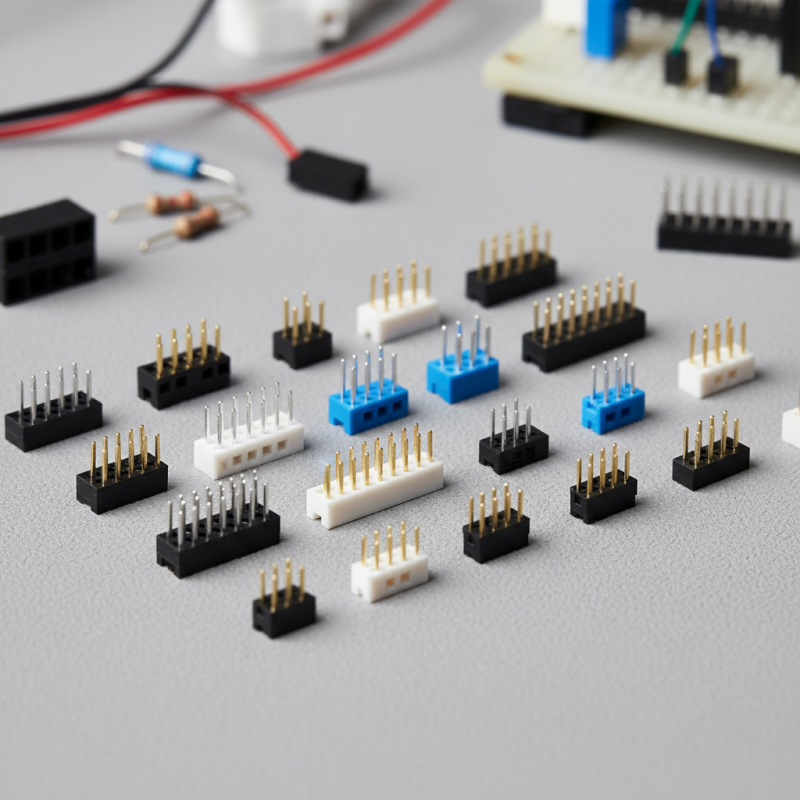
Overview of Pin Header Sockets and Their Applications
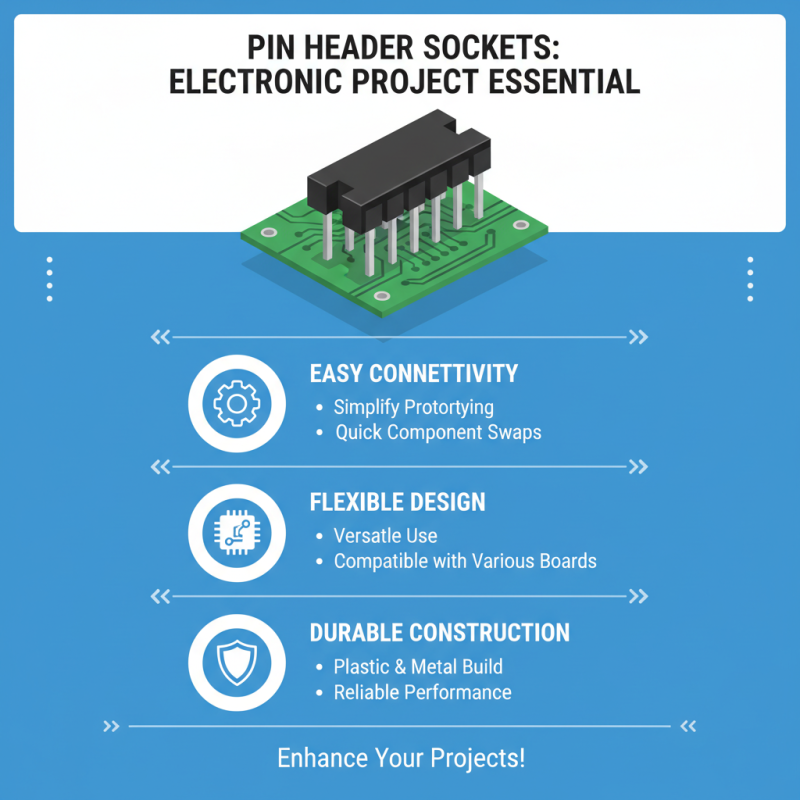
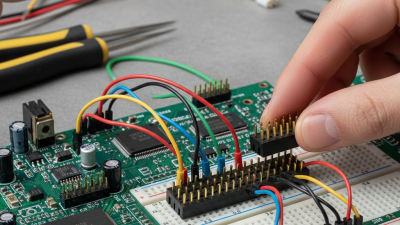
Pin header sockets play a vital role in electronic projects. They provide a simple way to connect and disconnect components, making prototyping easier. Commonly used in various circuit boards, these sockets allow for flexible designs. They are typically made of plastic and metal, ensuring durability.
When you choose a pin header socket, consider the pin spacing and height. A mismatch can lead to poor connections. Some projects may require a specific size or orientation. Knowing your project's needs is crucial. Socket quality can vary. Low-quality options can lead to malfunction. It’s essential to put your trust in reliable choices.
Additionally, pin number can impact functionality. More pins allow for complex connections, but complexity can also bring challenges. You might find that fewer pins are easier to manage. Experimenting with different configurations can lead to better outcomes. Learning from mistakes is part of the process. Embrace the trial and error that comes with designing your projects.
Criteria for Selecting the Best Pin Header Socket for Projects
When selecting pin header sockets for your projects, consider several key criteria. The pin count is critical. Determine how many connections you need. This will help narrow down your options. The pitch size also matters. A standard pitch is 2.54mm, but other sizes exist. Choose one that fits your PCB layout.
Material quality is essential. Look for sockets made from durable materials. They should withstand repeated connections. The insertion and extraction force should be manageable. Too tight can cause damage. Too loose leads to unreliable connections.
Tips: Always test the fit before finalizing your design. This can save time later. Check for compatibility with your components. Some sockets may not work with specific headers. Lastly, don't overlook the importance of insulation. Proper insulation prevents shorts and improves safety.
Top Brands and Manufacturers of Pin Header Sockets in 2026
In 2026, the landscape of pin header sockets has evolved significantly. Many manufacturers focus on quality and reliability. Selecting the right pin header socket requires understanding your project needs deeply. Factors like pin count, spacing, and durability are crucial. A socket that doesn’t fit may hinder your progress. The risk of selecting poorly is real.
Top brands are known for innovation. They push the boundaries of design and function. Some options offer unique features, such as enhanced insulation or solderability. These features can make a big difference in longevity and performance. However, not every socket lives up to the hype. User reviews often highlight problems with durability over time.
Finding reliable manufacturers can be challenging. Some deliver consistently, while others may disappoint. Balance between cost and quality is essential. Undoubtedly, every project may face unexpected setbacks. These moments teach valuable lessons about precision and attention to detail in selecting the right components. Challenges make the learning process worthwhile.
Comparative Analysis of Pin Header Socket Features and Specifications
When selecting pin header sockets for projects, specific features and specifications play a crucial role. A comparative analysis of these components reveals significant differences in performance. For instance, the material composition impacts both durability and conductivity. According to a recent industry report, sockets made from high-quality thermoplastic materials show better retention characteristics, enduring up to 1,000 mating cycles before showing signs of wear.
Additionally, contact pitch is another key consideration. Standard options usually range from 2.0mm to 2.54mm. However, more specialized sockets provide various pitch sizes to accommodate different electronics needs. A study published in the Electronics Components Journal emphasizes the importance of matching the pin spacing with circuit board design to prevent connection issues. This helps avoid costly project setbacks. In fact, mismatched sockets account for about 15% of manufacturing defects.
Other aspects include current rating and temperature tolerance. While many pin header sockets handle about 3A, some are rated for 5A, providing added flexibility for power-intensive applications. A focus on these specifications highlights areas for potential improvement in component selection. As the industry evolves, reflecting on these specifications can lead to better project outcomes.
2026 Best Pin Header Socket Options for Your Projects
| Type |
Number of Pins |
Pin Pitch (mm) |
Material |
Operating Temperature (°C) |
Current Rating (A) |
| Standard Pin Header |
2 to 40 |
2.54 |
Phosphor Bronze |
-40 to 105 |
3.0 |
| Right Angle Pin Header |
3 to 20 |
2.54 |
Brass |
-40 to 105 |
2.5 |
| Stackable Pin Header |
10 to 50 |
2.54 |
Copper |
-40 to 85 |
3.5 |
| Vertical Pin Header |
2 to 16 |
3.96 |
Nickel Plated Brass |
-25 to 85 |
5.0 |
Trends and Innovations in Pin Header Socket Technology for 2026
As we approach 2026, the pin header socket technology is evolving rapidly. Recent reports suggest a shift towards enhanced materials that increase durability and conductivity. The market for these components is projected to grow at a CAGR of 6.5% from 2023 to 2028, driven by rising demands in consumer electronics and more complex circuit designs.
Innovations are focusing on compact designs and improved compatibility. Newer pin headers offer greater pin density without compromising space. This is crucial for modern devices that require high performance in limited areas. Moreover, some manufacturers are experimenting with corrosion-resistant coatings, which may significantly extend the lifespan and reliability of connections.
Challenges remain in manufacturing consistency. Minor defects in socket design can lead to significant issues in performance. Quality control is vital. Reports indicate that poor connections result in a 15% increase in device failures in real-world applications. Addressing these issues will be essential for keeping up with growing expectations in the tech industry.
2026 Trends in Pin Header Socket Technology

 Email
Email WeChat